The AI Success Score: A Simple Way to Measure Your AI Visibility
With Google AI Overviews, ChatGPT, and Perplexity dominating how people find information, traditional Google rankings only tell part of the story. Today, success means being mentioned, referenced, and cited by AI chatbots.
ZipTie, a specialized AI search monitoring tool, has developed metrics to track exactly that – your brand’s visibility across multiple AI-generated responses.
What Is the AI Success Score?
The AI Success Score is ZipTie’s solution for measuring your performance across major AI platforms: AI Overviews, ChatGPT, and Perplexity.
It’s a single, clear number that shows how well your business appears in AI search results – and more importantly, where to focus your efforts for maximum impact.
One Score Across Three Major Platforms
Instead of developing different signals from different AI tools, ZipTie’s AI Success Score provides unified performance tracking across:
Google AI Overviews
ChatGPT
Perplexity
This consolidated view makes it easy to see how your business performs in AI answers.
What Does the Score Measure?
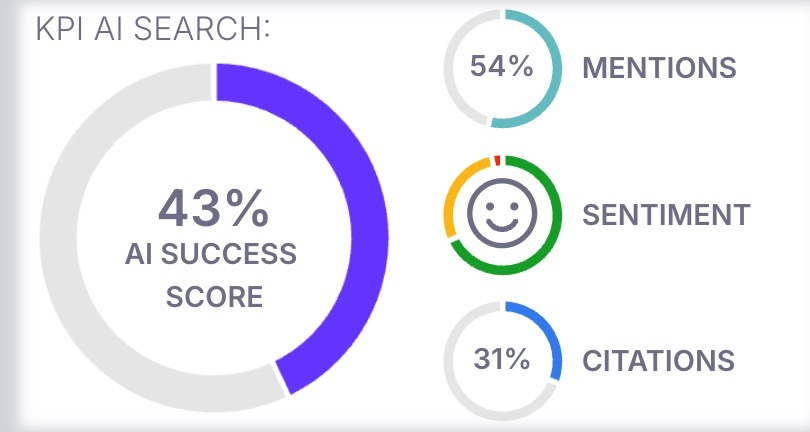
ZipTie’s AI Success Score evaluates three key elements of AI search performance:
1. Brand Mentions
How often do AI tools mention your brand? This metric tracks your direct presence in AI responses, including references to your company, products, or services.
2. Sentiment Analysis
It’s not enough to just be mentioned – context matters. The score tracks whether mentions are positive, negative, or neutral. Positive mentions significantly increase your chances of winning customers.
3. Citations
Citations measure how often AI search engines cite your website as a source. This shows whether your content is seen as authoritative enough to influence AI-generated answers.
Together, these three metrics paint a complete picture of your brand’s AI search success.
Tracking Your Success Over Time
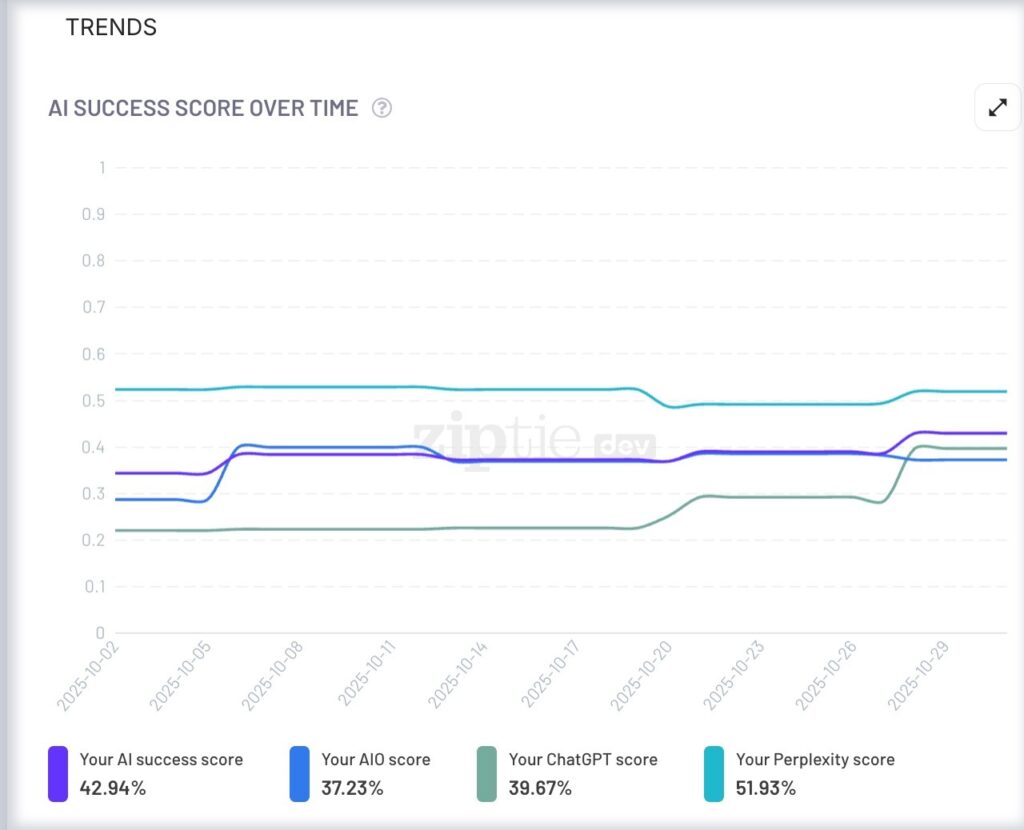
ZipTie lets you monitor your performance over time through the Trends tab, where you can track mentions, sentiment, and citations as they evolve.
Multiple Levels of Analysis
ZipTie offers flexible data views at different levels:
Project Level: See your overall AI success in a single score – your big-picture performance.
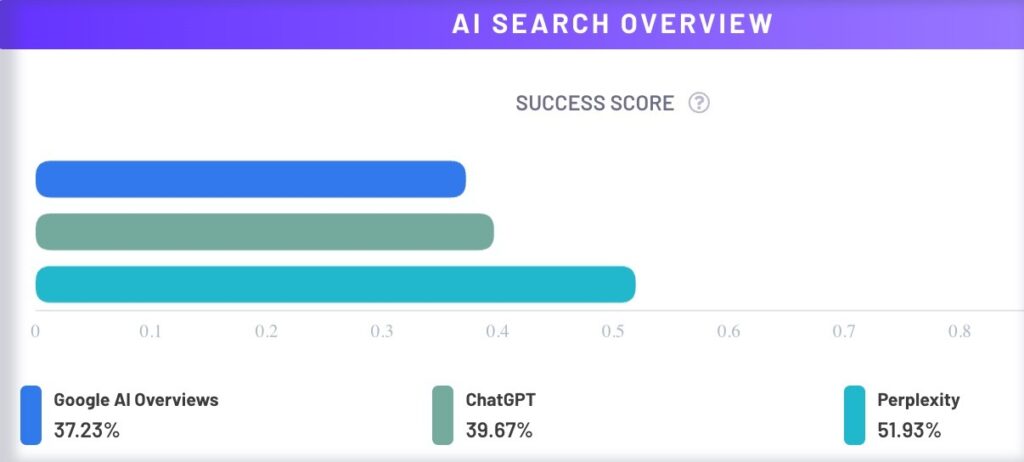
Platform Level: Compare how you perform across Google AI Overviews, ChatGPT, and Perplexity. You might discover you’re strong in Google but weak in ChatGPT—or vice versa.
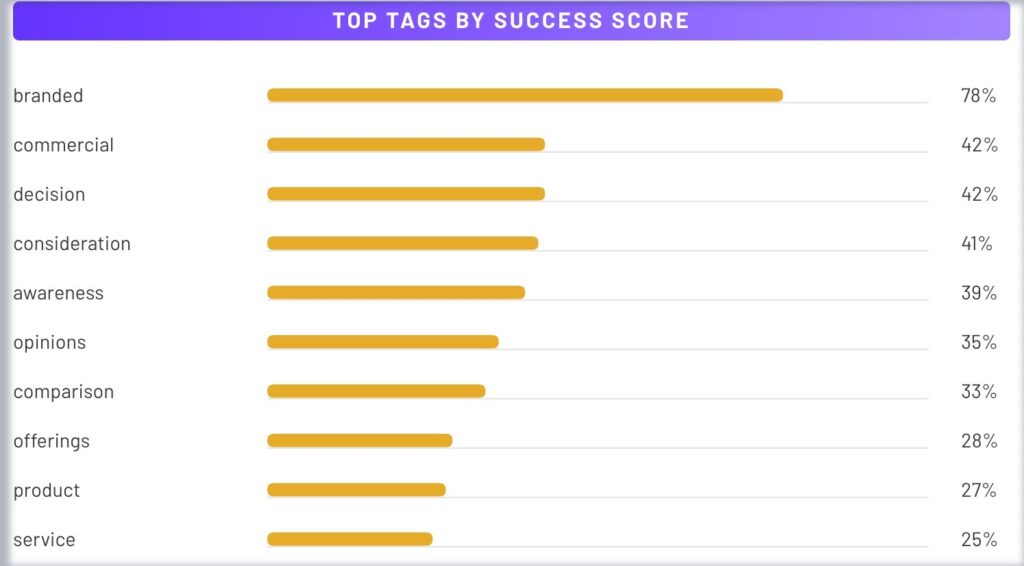
Category Level: Using ZipTie’s automatic query categorization, identify which topic categories you dominate and which need work.
Query Level: Drill down to individual queries to see exactly where you’re succeeding and where you need to improve.
What to Do With Your Score
Once you have your AI Success Score, look for patterns:
Which platforms consistently favor your brand?
Which ones don’t?
Ask diagnostic questions. For example:
Low ChatGPT scores? Your content might be JavaScript-generated, making it harder for AI to access.
Strong on “how-to” queries but weak on comparison queries? This could signal sentiment issues or insufficient information for AI tools to evaluate you fairly against competitors.
These are just starting points. The real value comes from analyzing your data, identifying patterns, and asking: What can I do to improve this score?
Taking Action
ZipTie provides several tools to help you improve:
Insights Tab: Find specific optimization steps tailored to your performance
Content Optimization Module: Get recommendations for improving your content
Queries Tab: Identify which queries have the lowest scores so that you can prioritize them. Also, in the Queries tab, you can find queries where AI search engines present you with negative sentiment and develop strategies to address them.
The journey starts with understanding your AI Success Score, finding patterns in your data, and taking targeted action to improve your visibility where it matters most.
SEO still matters for AI Search engines
You’ve probably seen countless posts declaring “SEO is dead” thanks to AI search engines like ChatGPT, Perplexity, and Google’s AI Overviews.
Instead of joining the doom-and-gloom chorus, I decided to dig into the data.
After analyzing 25,000 real user queries across AI search platforms, I’ve discovered something crucial that contradicts the popular narrative.
Traditional Rankings Still Matter
Here’s what my research revealed:
If your website ranks #1 in Google’s traditional results (blue links), you have a 25% chance of being used as a source in AI Overviews.
The higher you rank in Google’s top 10, the more likely you are to appear in AI search results across platforms.
This isn’t speculation – it’s based on real queries from real users across ChatGPT, Perplexity, and Google AI Overviews.
SEO Matters. Top 10 matters
The higher the website is in top 10, the higher chances of inclusion in AI Overviews, ChatGPT and Perplexity.
It’s clear that if you rank top 1, statistically speaking, you will be included as a source in 25% of cases in AI Overviews.
You will likely appear in Perplexity and ChatGPT as well.
How AI Search Actually Works
Through my analysis and documents from Google, including the Google antitrust trial, I’ve pieced together how AI Overviews likely operates:
Pre-selection: The system identifies the top N documents that best match a user’s query.
Content extraction: It pulls relevant information from these high-ranking sources
AI generation: Gemini (Google’s AI model) synthesizes this content into a coherent answer
Here’s the smoking gun from the Google trial: An internal Google document (referenced in trial exhibits but not publicly accessible) revealed that this approach of using top-ranking content to ground AI responses increases accuracy.
This explains exactly why traditional Google rankings remain so crucial for AI search inclusion.
Why You Still See Sources Outside the Top 10
You might wonder: “If AI search relies on top 10 results, why do I sometimes see sources that don’t rank highly?”
There are two main reasons:
1. Personalization & caching
Some sources might rank in the top 10 for other users, even if they don’t for you
2. Query Fan-Out Technique
This is the big one. According to Google’s own documentation: “Both AI Overviews and AI Mode may use a ‘query fan-out’ technique — issuing multiple related searches across subtopics and data sources — to develop a response.”
While Google doesn’t provide details on exactly how this works, you can try this:
Open Perplexity (you might wonder why I’m not using Google for this demo—it’s because Perplexity actually shows you the multiple searches it performs, while Google keeps this process hidden). Ask “What is SEO and how does it compare to SEM?”
Watch carefully as Perplexity processes your question.
You’ll see it performs multiple searches behind the scenes: “What is SEO,” “definition of SEO,” “SEO explained,” “what is PPC,” and about 5 other related queries. This transparency lets you see how query fan-out works in practice.
This query fan-out technique is the main reason why pages outside Google’s top 10 can still appear in AI search results. However, if you rank in the top 10 for these sub-queries, you have a high chance of inclusion.
The Fundamental Shift: From Best Pages to Best Answers
Traditional SEO optimizes for the “best page.” When someone searches for “iPhone 15,” your page needs to cover everything to satisfy the user intent – specs, reviews, where to buy, comparisons.
AI Search looks for the “best answer.” When someone asks specifically about iPhone 15 battery life, you may rank top 1 in Google, but AI doesn’t care about it if you don’t provide a precise, relevant answer to that exact question.
In my experience, to be successful in AI Search, you should optimize for traditional search results, make sure your content is relevant, and focus on a few other ranking factors I will discuss in other articles.
The Bottom Line
SEO isn’t dead – it’s evolving rapidly. The fundamentals still matter, but execution must shift from keyword optimization to user-intent optimization.
Instead of asking “How do I rank higher?” start asking “How do I better serve users who have specific questions?”
That mindset shift is the key to thriving in the AI search era.
The data proves that traditional SEO foundations remain important, but the content strategy on top of those foundations needs to be completely reimagined for an AI-first world.
Focus on creating content that directly answers user questions, structure it clearly, and make it genuinely useful.
Do that consistently, and you’ll find success across both traditional search and AI platforms.
Google just dropped some big news at their yearly Google I/O conference – AI Mode is now rolling out to everyone in the US without having to opt in. This has a lot of people asking: should we really care about this?
In short, yes – but there’s more to the story.
How Google AI Mode Actually Works
First, let’s see how Google AI Mode works.
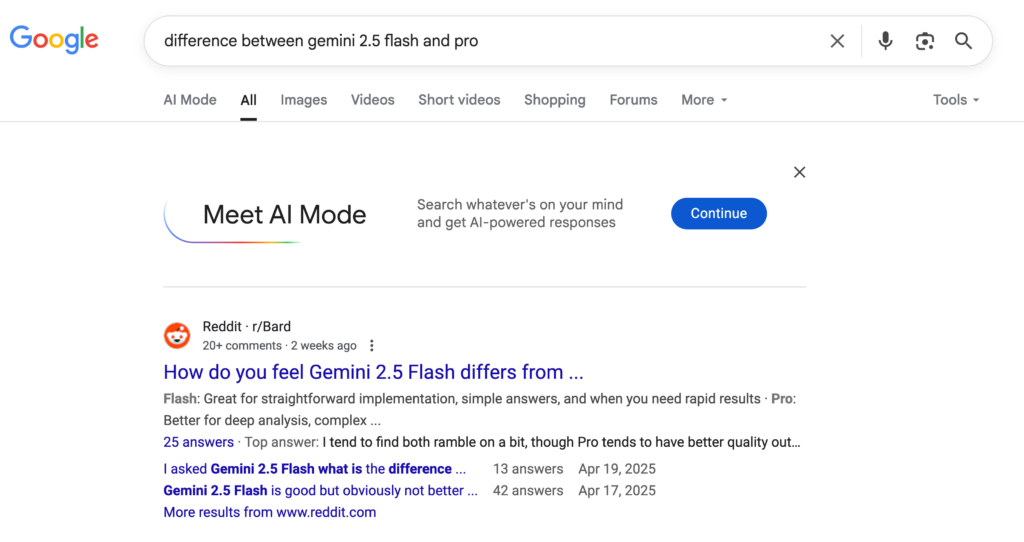
When you open Google.com, you’ll see AI Mode on the first display, allowing you to select whether you want to use “traditional” search with AI Overviews or use AI Mode.
After clicking on AI Mode, you’ll be able to ask detailed questions just the way you use ChatGPT.
The biggest change you’ll notice?
No blue links under the answer. Instead, you get a conversation-style response without the option to quickly jump to traditional search results with AI Overviews. This could mean fewer clicks to websites since users can’t easily browse through the search results they might normally click on.
It’s a change that can have massive potential impact.
However, fortunately enough for websites and people driving traffic to websites (including SEOs), AI Mode is NOT a default experience for most users. In addition to this, currently, this feature is limited to US users only.
So AI Mode is an add-on you can use and test, while you can still switch back to “Traditional Google” by clicking on a tab.
Evolution Instead of Revolution
Let’s be real – Google had to respond to ChatGPT becoming a serious threat. But they’ve got users of all ages and tech comfort levels, so they couldn’t just overhaul their entire search engine overnight.
That’s why they started by letting people test the Search Generative Experience (SGE) back in 2023, then slowly expanded AI Overviews to more and more countries, followed by waitlists for AI Mode, and now they’re making it available to everyone in the US.
The main selling point? Convenience. Instead of opening a new tab and typing “ChatGPT,” people can just click over to the AI Mode tab while staying in Google.
It’s too early to tell the potential impact of this feature, but in the later part of the article I will show you how you can use it in your strategy without putting all eggs into one basket.
Can AI Mode Really Take On ChatGPT?
The convenience factor is huge. If you’re already using Google (and who isn’t?), it’s super easy to just click over to AI Mode rather than going somewhere else.
Users searching on Google who want a chat experience no longer need to open a new tab and type “ChatGPT” – they can simply switch to the AI Mode tab and get chatbot-style answers without leaving Google.
As for which one gives better answers, it’s too early to say for sure, but Google seems to have some significant advantages:
They have a much bigger collection of web pages to pull from, which could mean more comprehensive answers. The scraping technology is more limiting for ChatGPT – typically ChatGPT will have issues with extracting content from JavaScript websites (and they are EXTREMELY common). Also, multiple websites just block ChatGPT from accessing their content altogether.
Google has decades of user interaction signals they can analyze against traditional search results.
They can leverage ranking signals they’ve developed and refined over 20+ years, while ChatGPT is relatively new to the search space.
AI Mode runs on Gemini 2.5 (Google confirmed this), while ChatGPT likely uses GPT-4o for free users.
In multiple benchmarks, Gemini 2.5 consistently scores better on both intelligence metrics and AI performance tests.
AI Mode automatically creates answers using recent web sources, but ChatGPT doesn’t always search the web for every question (to ensure the most up-to-date information).
Also, Google announced multiple features known from other platforms (such as Deep Research), personal context, or shopping mode.
My personal opinion is that it will be very difficult for ChatGPT to win over Google over time.
How AI Mode Is Different From AI Overviews
The biggest difference is that AI Mode tries to answer pretty much everything you ask, while AI Overviews is pickier. For example, if you just type “iPhone,” AI Overviews won’t generate an answer because it’s not clear what you want – are you shopping, looking for reviews, or interested in the history of iPhones?
They share the same engine used to generate answers (it’s Gemini 2.5). The way they work is similar – they see what are the best sources on a given topic and they generate the answer based on both internal knowledge of Gemini and the list of sources.
Currently, I don’t see massive differences in the output structure, but I suspect it will be a playground for Google to experiment with different approaches.
Logically, there should be one big difference: I assume that AI Mode has different goals and success metrics:
Whether the answer terminated the query (if yes, that’s likely considered successful)
Did the query make people ask follow-up questions (engagement metric)
Did the user click one of the sources? (citation engagement)
With the main current experience – AI Overviews – follow-up questions aren’t necessarily a KPI
Making AI Mode a separate product (likely intended at this phase for early market adopters) will let Google experiment more freely without disrupting their main search experience.
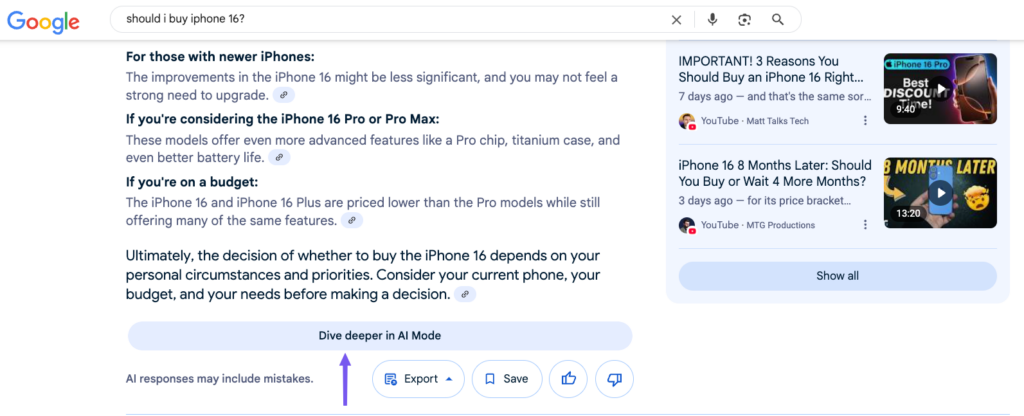
Additionally, now we can see that Google is actively recommending people to “Dive deeper in AI mode”. This can how many people click on search results.
AI summaries makes clicks less important
AI Summaries (be it AI OVerviews, AI Mode, or ChatGPT summaries) make clicks less important, especially for informaitonal queries.
If I type: “benefits of celery juice” I will be probably satisfied by the answer and no need to click as they are satisified.
AI changes the game. Google in their latest article: Top ways to ensure your content performs well in Google’s AI experiences on Search wrote: “(…) you might not optimize for these if you focus too much on clicks instead of the overall value of your visits from Search. Consider looking at various indicators of conversion on your site, be it sales, signups, a more engaged audience, or information lookups about your business”.
What This Means For Your Marketing Strategy
Google changes massively. Different interface, clicks are becoming less important.
One thing is crystal clear – conversational search is becoming a big deal. And this seems to be more natural for people to see AI answers rather than see blue links to top 10 search results.
More and more people will talk to Google like they talk to ChatGPT, getting direct answers from either AI Overviews or AI Mode.
This means you need to rethink your SEO strategy.
Part of it is query/prompt research.
If you run a marketing agency, you might have traditionally focused on keywords like “marketing,” “marketing agency,” and “marketing services.” But with AI search, you need to think about the actual questions your potential customers might ask.
The tricky part? These conversational queries probably won’t show up in Google Search Console or your typical keyword tools. So you’ll need to:
Think about each stage of your customer’s journey
Put yourself in their shoes and predict what questions they’d ask
At ZipTie we help mind the gap and generate these queries our our AI Assistant (beta).
Then you will be able to track your AI success score (if AI uses you as a source, does it mention you, and if so, in a positive, negative, or neutral way).
What To Do Now
Right now, there are no tools that will let you check how successful you are in Google AI Mode.
At ZipTie.dev, in our AI features, we’re currently tracking AI Overviews, ChatGPT, and Perplexity. We’ll add Google AI Mode to our tracking once more people start using it regularly.
While I don’t have proof for this on a bigger scale, optimizing for AI Overviews might help with AI Mode too, since their underlying technology follows very similar logic in generating the output.
As all these AI search features keep evolving, staying on top of how they affect your online presence will be super important for making sure people can still find you in this increasingly AI-driven search world.
Personally, I will focus on AI Overviews mainly (as this is the biggest market of AI Search).
However, I will use AI Mode regularly, primarily for three things:
To experience how it differs from AI Overviews, ChatGPT (to stay on top of the trends)
To understand what factors are important for Google when AI Overviews is not available
To assess potential risks for SEOs & content creators whose primary source of income was from Google Search engine
ZipTie tracks AI Overviews, ChatGPT and Perplexity
ZipTie had one of the biggest updates in its history. ZipTie can now measure the success of your business in the most popular AI Search Engines:
Google AI Overviews
ChatGPT
Perplexity
Tracking AI search success is based on a different set of metrics than SEO metrics we used to track.
In particular, brand mentions are becoming much more important. That’s why we track whether AI search engines mention your brand, and if so, if it’s in a positive way.
ZIpTie also helps you prioritize which queries you would need to optimize for.
Checking your AI search success
Multiple brands now struggle to measure their AI search performance.
Now you can use ZipTie to track your AI search performance across the three most popular AI search engines.
It’s pretty easy, you just enter a list of queries that are relevant to your business (or use our query generator), and ZipTie will check them and generate a report.
In the screencap below we can see an AI success score of 61%.
To calculate the AI success score, we take into consideration the 3 most important metrics: brand mentions, brand sentiment and website citations.
You can then narrow down your analysis to see in which AI engines you are successful and in which you’re not.
Understanding the differences between your success score in ChatGPT, Perplexity and AI Overviews is important because while these AI search engines are similar to some extent, there are some differences.
For instance, Google AI overviews seem to be more reserved when giving opinions and preferences, while ChatGPT and Perplexity try to be more personable.
I will be covering differences between various AI search engines in future articles.
Analyzing the competition
Using ZipTie, you can easily identify your main competitors in AI search results. The tool shows you who’s performing well overall, and which competitors are succeeding on specific AI search engines.
By studying the strategies of top performers, you can adopt their successful approaches to improve your own website’s performance.
Smart prioritization
It’s easy to get overwhelmed by the data. AI Overviews, ChatGPT, Perplexity, multiple metrics, multiple queries…
Which queries to optimize for?
That’s why we try to make it as straightforward as possible.
For every query we present an AI Success score. This is a combined measurement on how successful you are in all major AI Search engines.
Help with optimization
There are two metrics of AI success:
if your brand is mentioned in an AI answer (this way you are more visible)
If your brand is used as a source (this way you are more visible in AI search as well as influencing the way people see the answer).
To make it extremely easy for you to decide which queries you need to optimize for, we mark them in the queries table with these two labels:
Aim for citations – this way you boost visibility and shape the narrative
Aim for mentions – by increasing brand mentions in AI answers you improve your brand visibility
We will publish some guides on how to optimize for citations and mentions but this is a perfect foundation for you to start optimizing for AI search.
New Query Generator Feature
We noticed that our clients struggled with deciding which queries they should check.
That’s why we built our assistant.
There are 3 options you can follow:
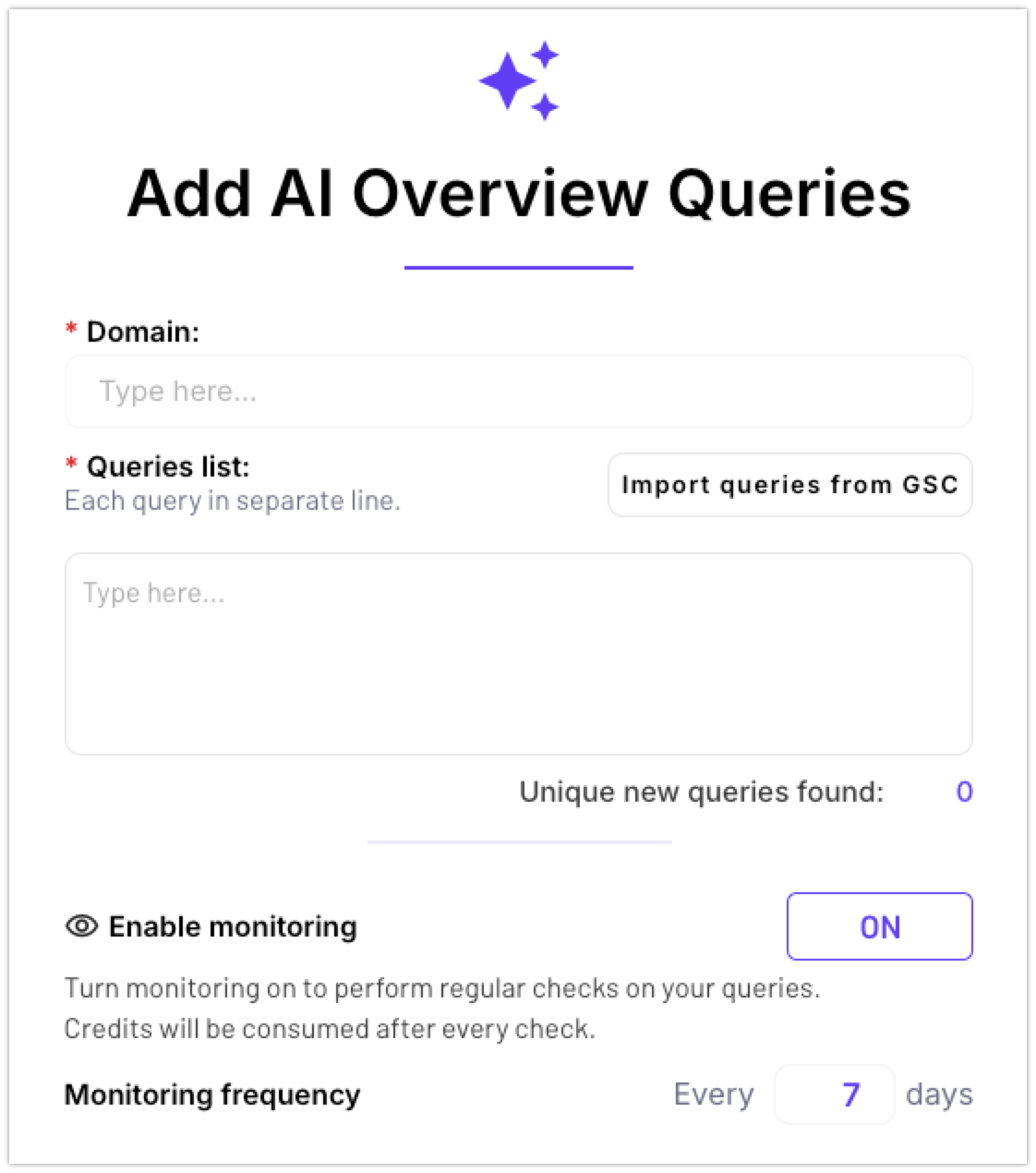
You can use our generator. You just type the URL of your brand, service, or blogpost.
Then ZipTie will generate a list of queries.
You can import queries from Google Search Console.
And of course, you can type the queries on your own.
This major update provides everything you need to succeed in the new AI search landscape.
Wrapping Up
ZipTie’s latest update transforms how you track success in AI search engines.
Now you can measure your performance across Google AI Overviews, ChatGPT, and Perplexity all in one place.
With our new AI Success Score, you’ll know exactly where you stand based on brand mentions, sentiment, and website citations.
Try ZipTie today!
AI is the revolution.
ZipTie is the solution.
Getting started is easy – use our new query generator, import from Google Search Console, or enter your own queries.
Try ZipTie free for 14 days and discover all our latest features! The trial gives you access to everything we offer (with the exception of GSC integration).
Already a ZipTie customer? You’re welcome to stay on your current plan, keeping your existing pricing while continuing to monitor AI Overviews.
Ready for tracking ChatGPT and Perplexiy? Upgrade to our new pricing plans to access our expanded capabilities. We’ve had to adjust our prices to accommodate these powerful new features.
Jump in and start using these new features today!
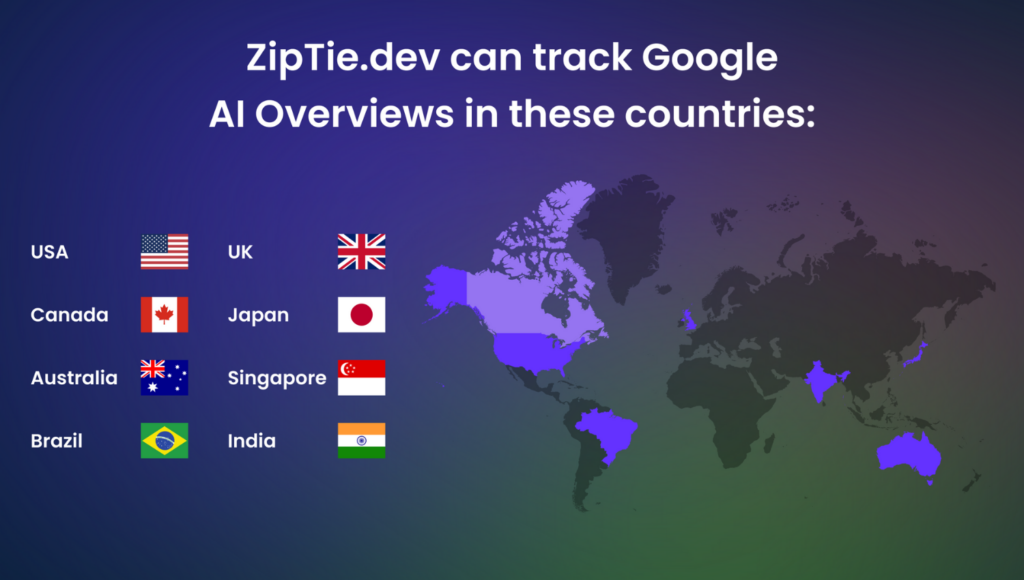
ZipTie can now track AI Overviews in the UK + 7 more countries
ZipTie.dev is now able to track Google AI in multiple countries, including the UK. This means ZipTie is the first tool that can effectively track AI Overviews in multiple countries.
List of supported countries
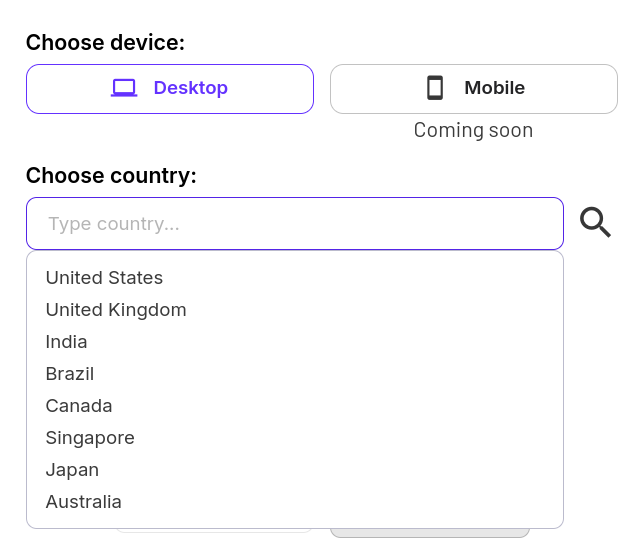
ZipTie can track visibility in AI Overviews in the following countries:
United States
United Kingdom
India
Brazil
Canada
Singapore
Japan
Australia
Need tracking in a country not yet on our list? Let us know by filling out our form. Each new country requires separate infrastructure, so showing strong demand helps us prioritize future expansions.
Multi-Language Support: A Hidden Gem
For each supported country, you can track queries in multiple languages. For example, you can monitor Spanish queries in the United States, where over 43.4 million people (13.7% of the population) speak Spanish at home.
How to track AI Overviews in countries other than the US?
It’s simple!
In the ZipTie AI Overviews module, you can now select your target country from the dropdown menu.
Is ZipTie.dev for you?
ZipTie’s AI Overviews monitoring is a good fit for:
SEO Agencies serving clients in any of our supported countries who want to track performance in local markets
Global Brands looking to measure their success across different countries
Marketing Teams monitoring brand visibility in multiple regions
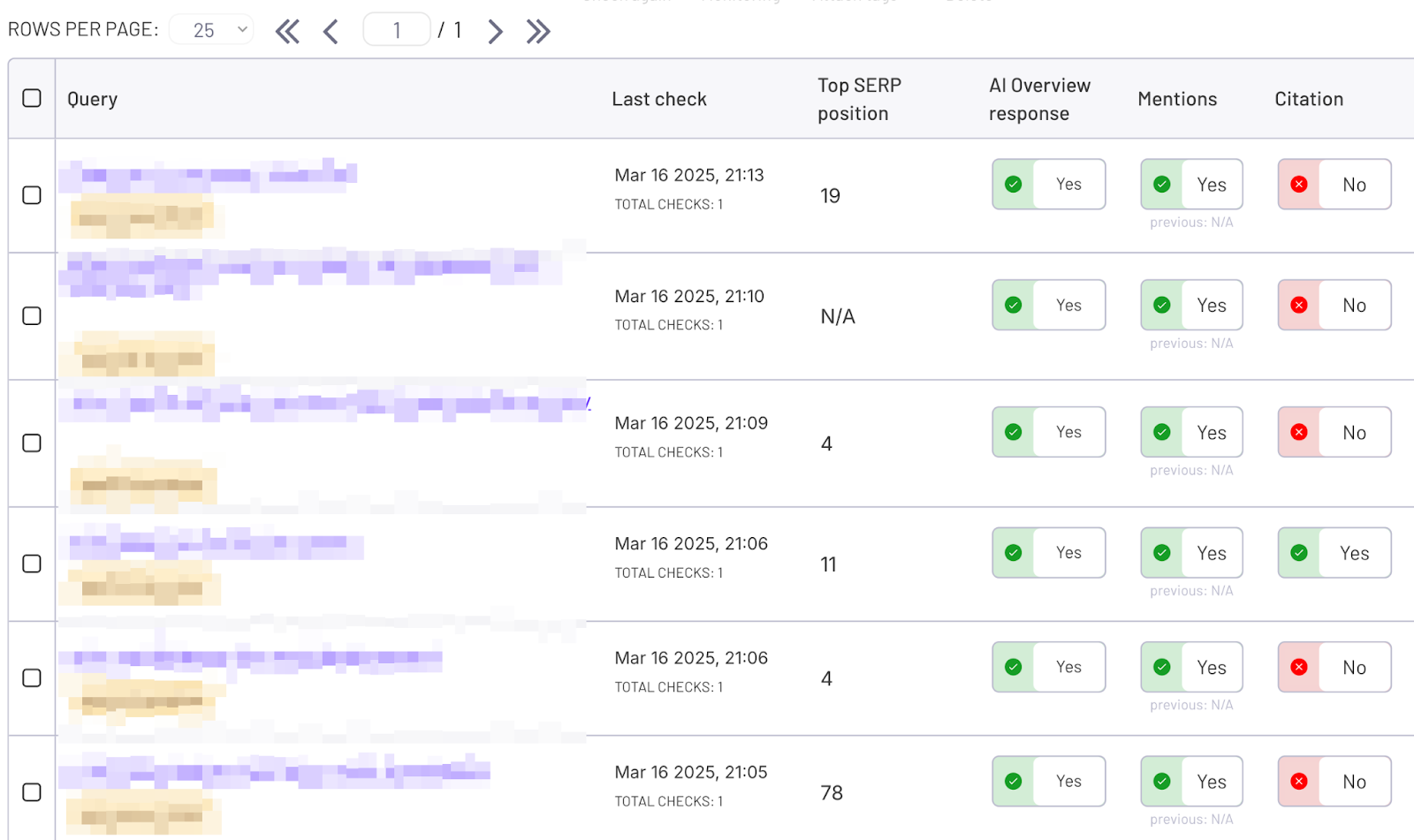
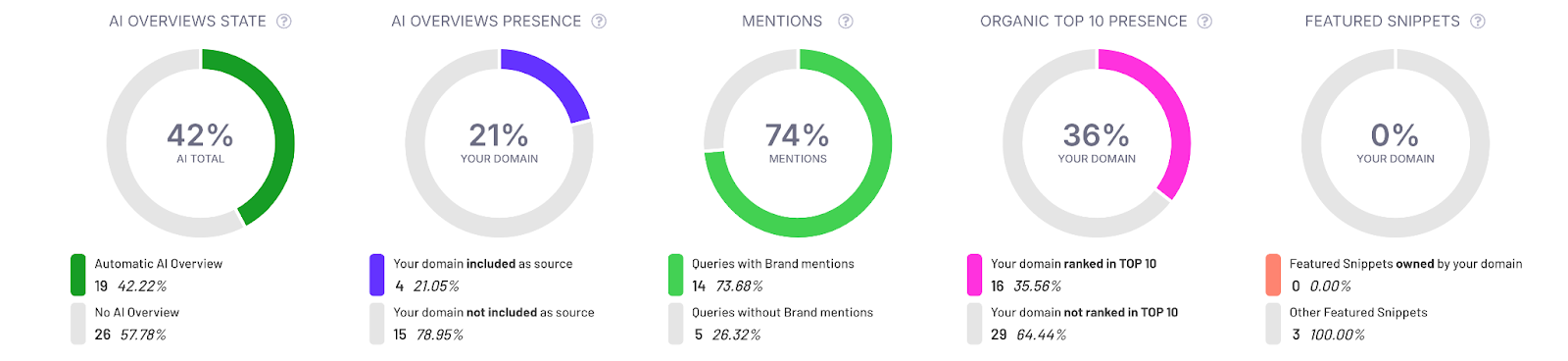
Below, you can find some screenshots from ZipTie. One shows the view displaying details of your AI Overviews visibility per query, and the second gives you general statistics.
ZipTie vs Other Tools
When I say ZipTie is the first tool that can efficiently track AI Overviews across multiple countries, I’m confident in this claim.
We’ve built specialized infrastructure for each country to ensure accurate results.
If you come across any other tool claiming to offer similar capabilities, we welcome the comparison! Contact me via LinkedIn or Ziptie’s contact form, and I’ll demonstrate how ZipTie provides more accurate insights into your website and brand visibility.
Ready to track your AI Overview performance globally? Give ZipTie a try today!
How AI Overviews will affect publishers
Google has massively changed the publishing landscape over recent months, due to AI Overviews.
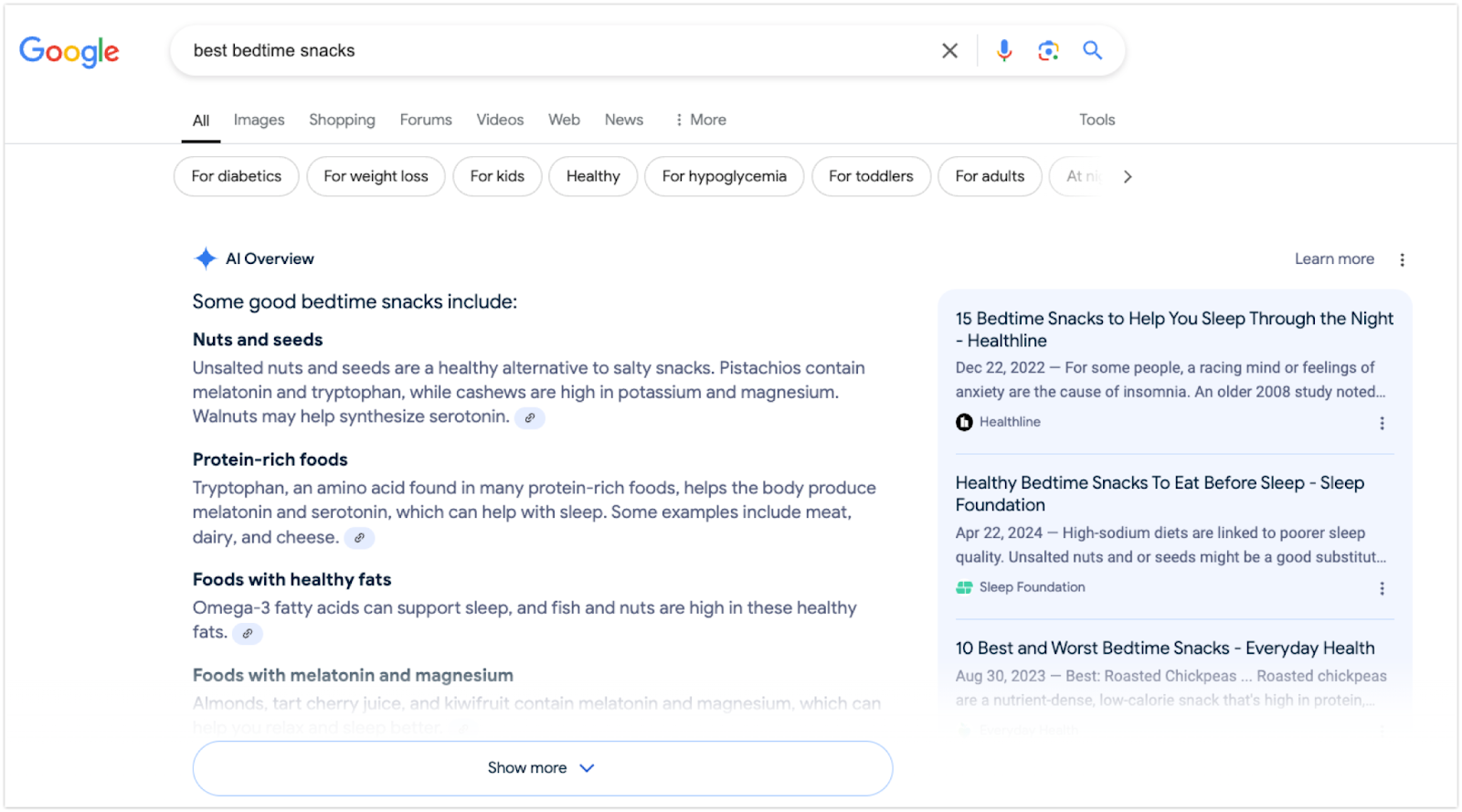
Let’s take the example of the query: “best bedtime snacks”.
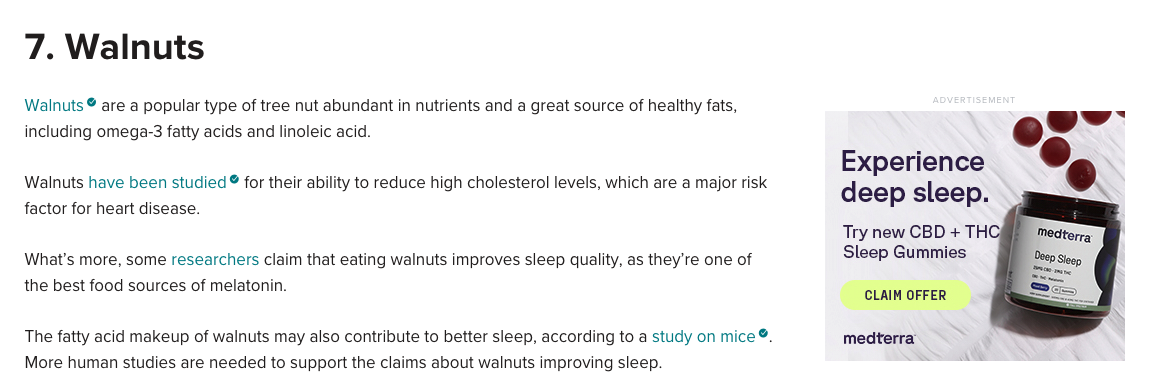
In the past, Google users would likely click on the first result, which is an article on Healthline.com, read or skim it, then some of them would click on ads, in this case: gummies for better sleep.
Occasionally, they would click other pages ranking in the top 10, but the idea is the same: they visit pages proposed by Google, and then they consume the content. Finally, they click the ads. Publishers earn revenue either through ads, or subscriptions (paywalls).
Now AI Overviews change everything. An AI summary appears on top of the results for multiple queries.
Let me show some examples:
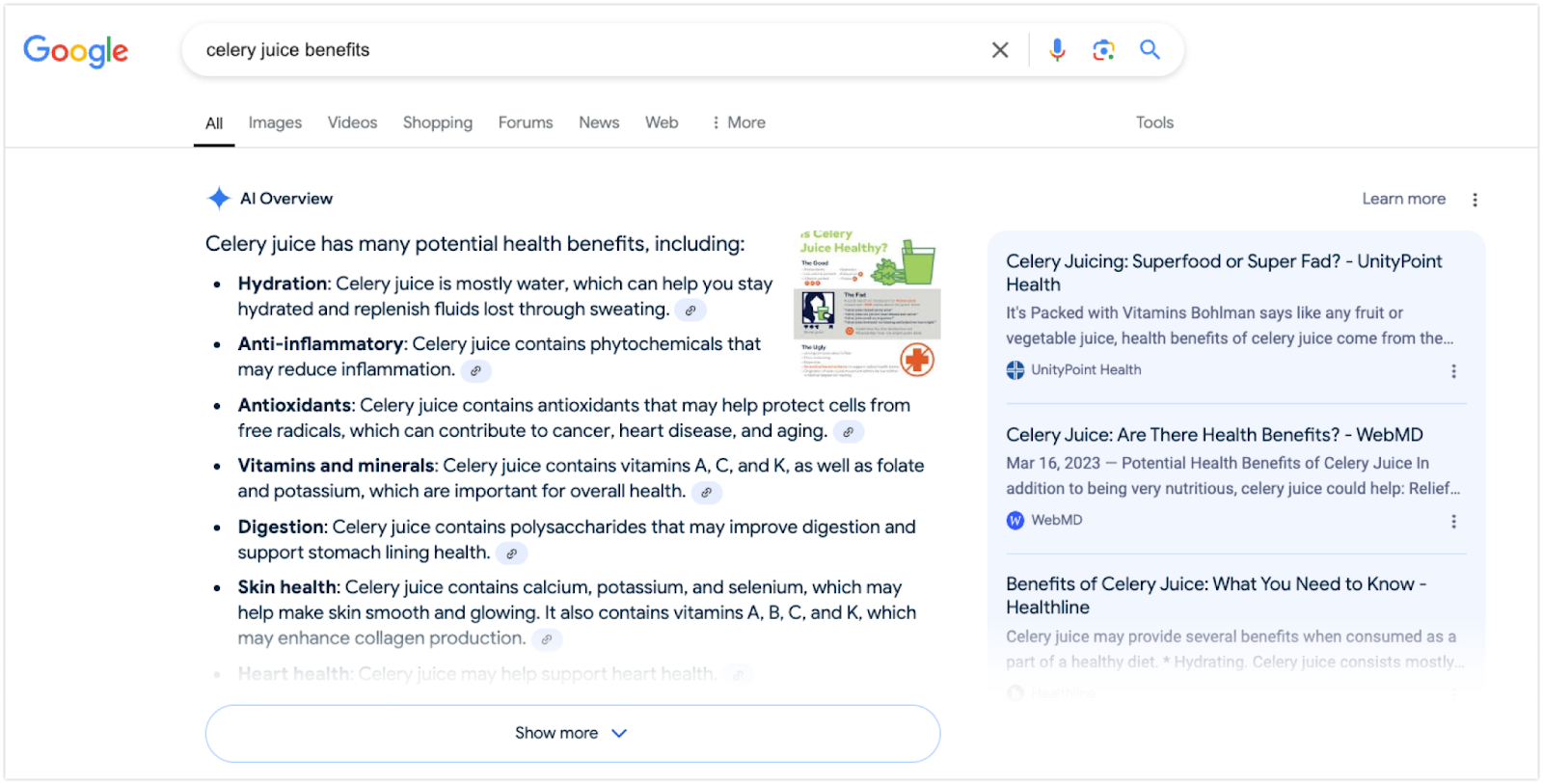
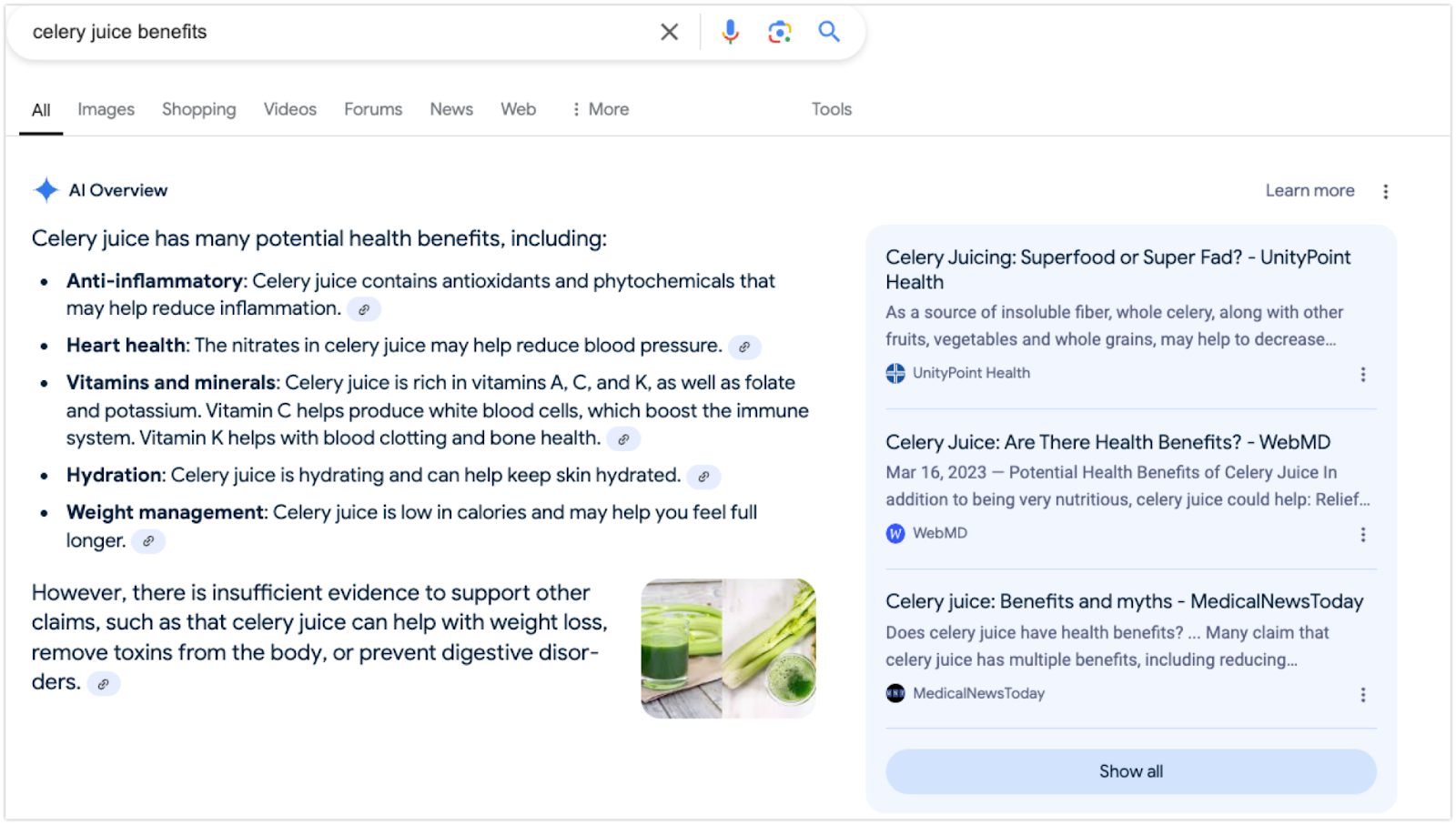
Example 1: “celery juice benefits”
Example 2: best bedtime snacks
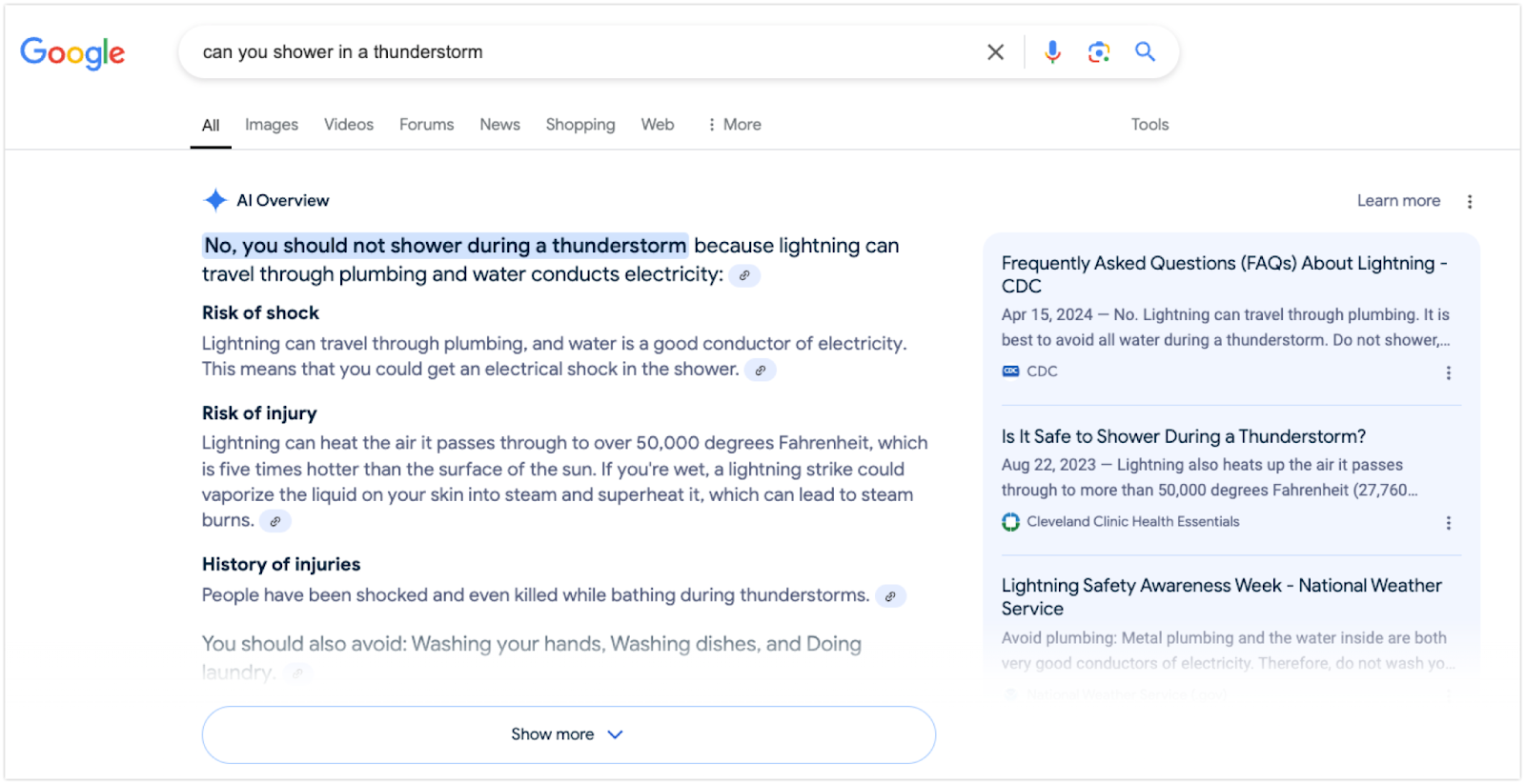
Example 3: can you shower in a thunderstorm:
This clearly changes the whole ecosystem, affecting which brands make it to the top of Google Search results and how publishers make money from online content.
Some SEOs compare this revolution to Featured snippets. In my opinion, AI Overviews will have a MUCH bigger impact than Featured snippets.
And, since Google AI Overviews usually show 3-6 sources, it’s much easier to get in the list of sources and, as a result, increase your SEO visibility.
Why you should care
AI Overviews is a massive change in Google search results.
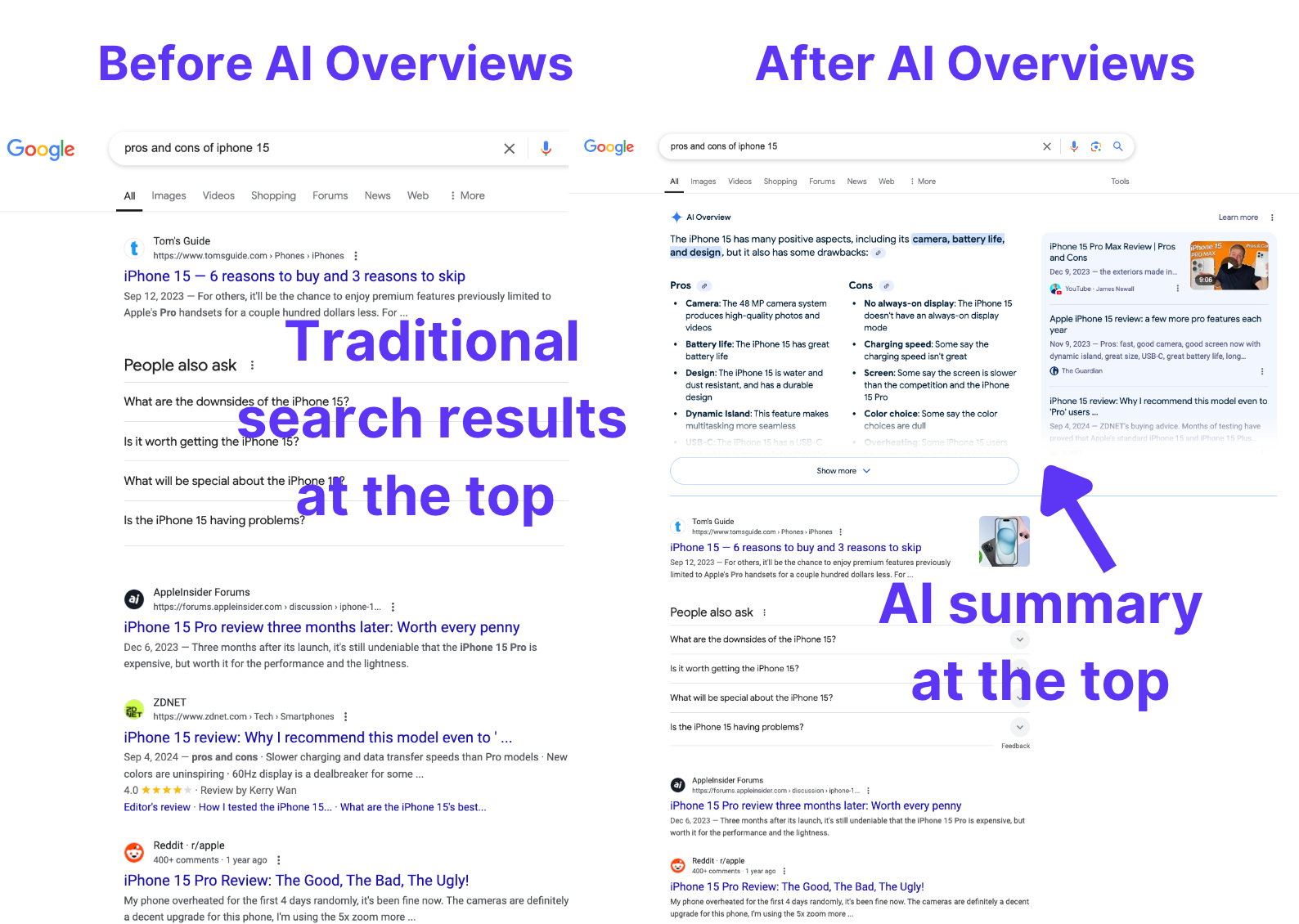
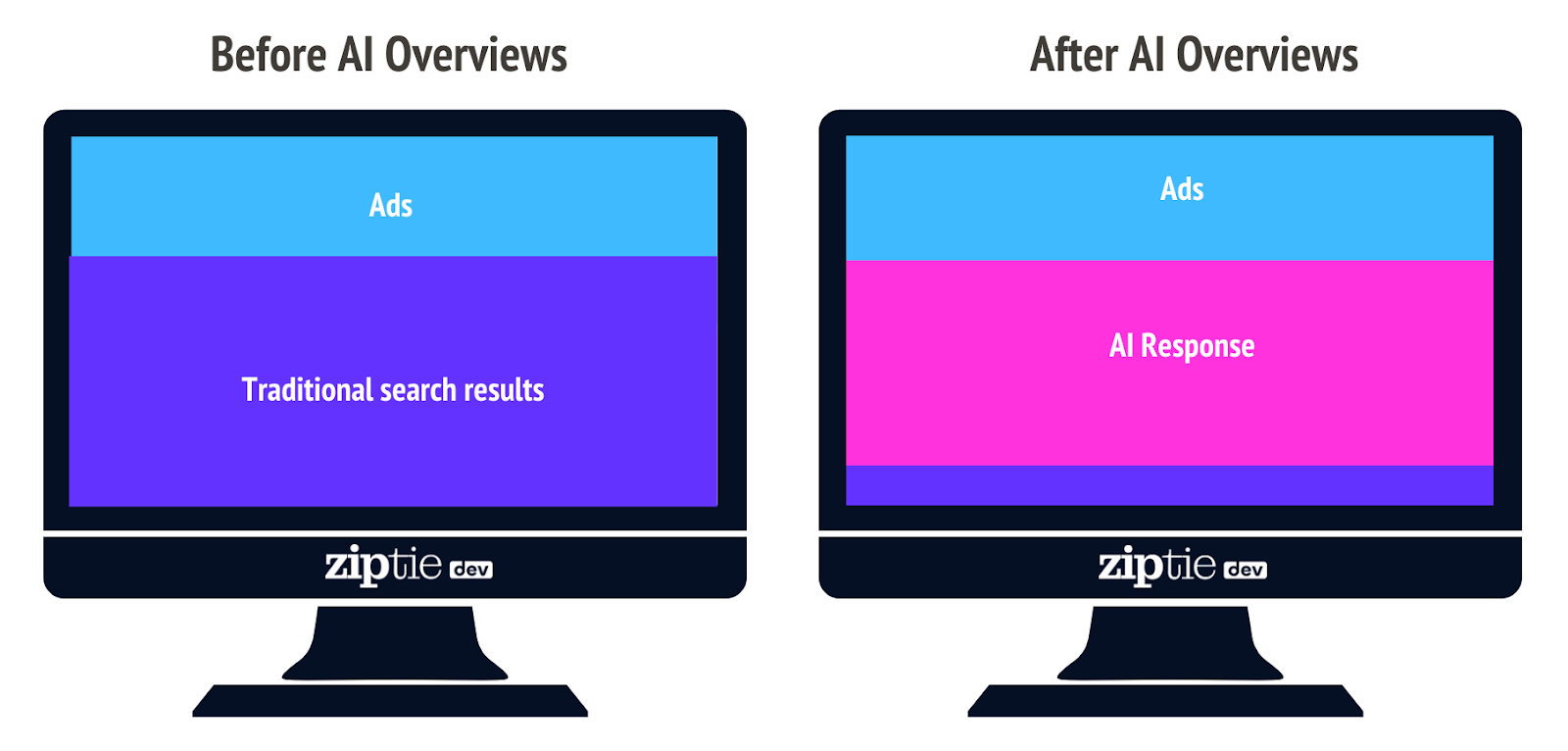
First and foremost, AI Overviews take the top spot, rendering traditional search results less prominent.
I illustrate this on the diagram below:
As it’s the top spot, getting the most attention of Google users, you should try to find a way to make your brand appear in AI Overviews.
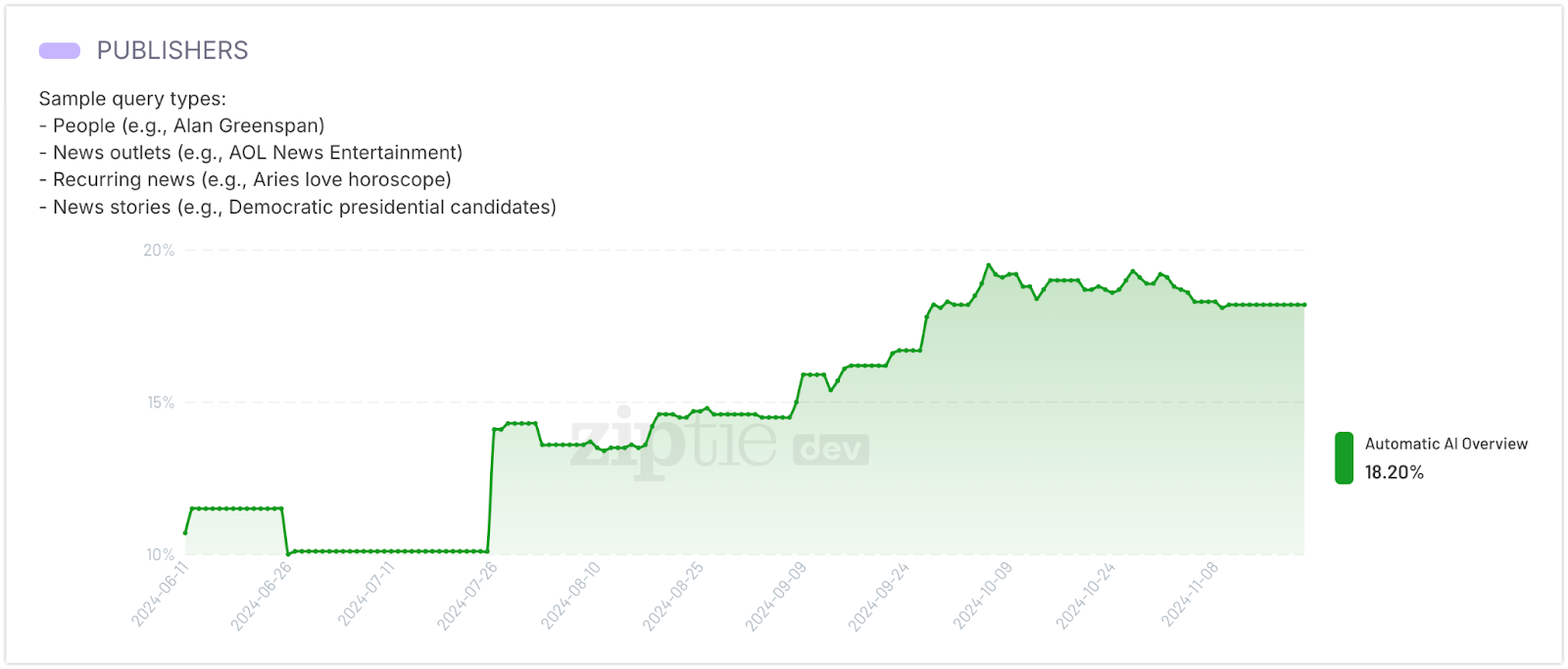
Currently, according to our benchmark, AI Overviews appear on 18% of queries related to publishers:
Just in June 2024, it was less than half.
Here are three main challenges for publishers associated with AI Overviews:
Impact on Clicks and Revenue: AI Overviews occupy the top spot, possibly fulfilling user intent. This can lead to fewer clicks and thus, potentially lower revenue
Let’s take “celery juice benefits” as an example (covered by WebMD and MedicalNewsToday).
Users typing this query get quite a comprehensive answer from AI Overview.
Honestly I feel there is no need for them to click on any of the sources.
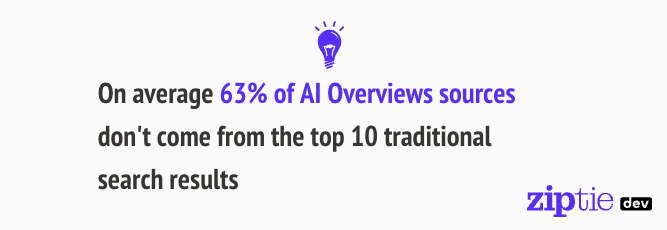
New competitors. New algo shifts from content to answers effectively promote new players in search results. According to my research, as much as 63% of sources don’t rank in the top 10.
Overlooked by most SEOs and marketers: shift from keywords to conversations. It’s more like the experience you know from chatGPT.
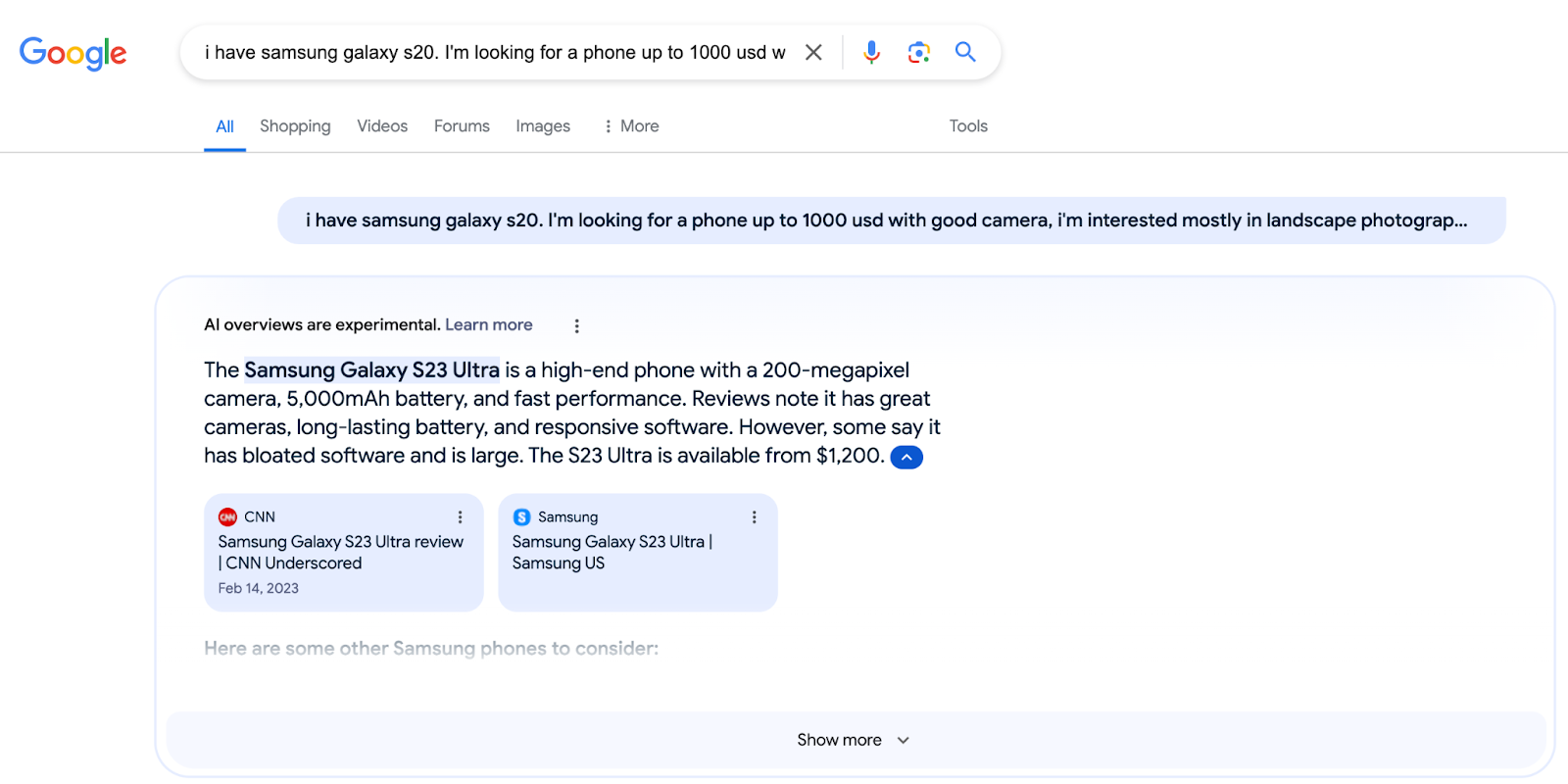
Thanks to AI Overviews, Google users can query Google using natural language.
This was not possible through the first 20 years of search engines, as users were forced to be limited to keywords.
Now I can tell Google: “I have a Samsung Galaxy S20. I’m looking for a new phone up to 1000 USD with a good camera, I’m interested mostly in landscape photography and good battery life”.
A disclaimer, I’m not an Apple fanboy, it’s just a simulation 🙂 I don’t own a Samsung s20 either.
I believe the Google search will become conversational over time. We will see if and when this behavior shift happen.
Regardless of whether or not this behavior shift happens, it’s clear that AI Overviews and other AI search interfaces (such as chatGPT) are effective for users and are becoming widely adopted (over 100 countries and territories now).
In the EU, regulation is holding back the release of AI Overviews, but this won’t be forever.
This means you will continue to see AI Overviews results across most markets including ones associated with your brand.
You cannot escape this change, but you can take steps to make sure AI Overviews works for you and your business.
4 observations related to AI Overviews
After analyzing thousands of AI Overviews, from the publishing space, as well as other niches, let me share four observations that I believe will help you understand it better, and (ideally) be included in AI Overviews and will limit time spent on trial and error.
Observation #1: Google AI Overviews ranking is different from “traditional” SEO
According to my research, as much as 63% of sources don’t come from the top 10 traditional search results.
This means that the algorithm for AI Overviews is different from “traditional” search results.
To understand this better, let’s use a simplified model.
In traditional ranking, Google’s job is to send you to pages that you will likely be satisfied with.
With AI Overviews the goal is different, it’s about showing you the best answer.
Let’s use an example.
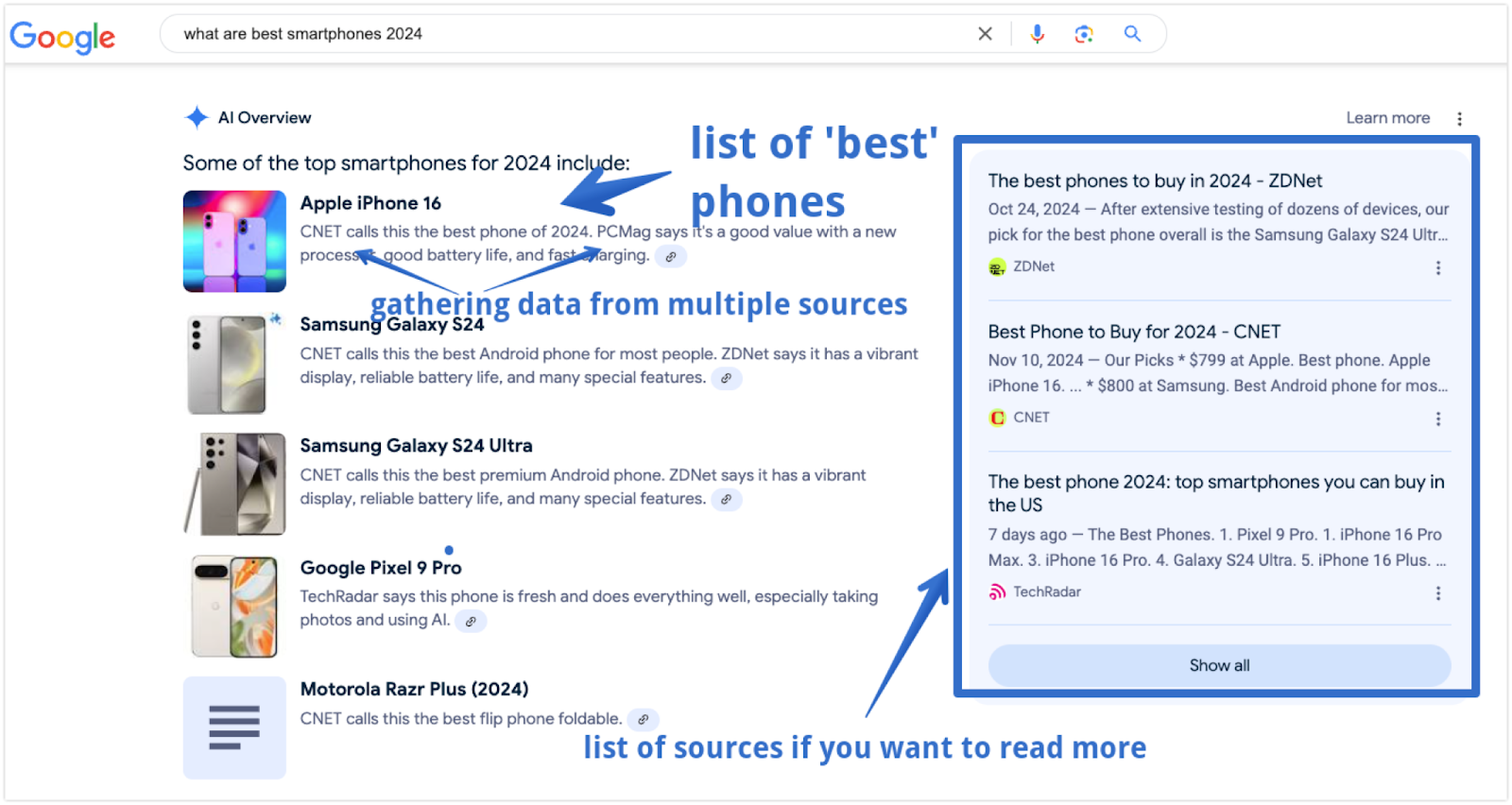
Type in Google: “Best smartphone 2024”.
You will see websites giving you a full overview of phones classified by reviewers as the best one.
For instance, a website ranked #1, ZDNet, gives us the following:
a handy ranking of phones,
detailed description of each tested phone, with links to comprehensive reviews (I didn’t check if they are biased though!),
additional information about choosing Android vs iOS and then, a comprehensive FAQ.
When Google users type “best smartphones in 2024” AI Overviews, like a good salesman, gives you a brochure: “here is list of best phones, buy one of them”).
This is effectively a shift from ranking best content to finding best content fragments.
This clearly implies different ranking signals.
You will find tons of articles and posts covering how to rank in AI Overviews.
Most of them focus on generic stuff.
What I recommend doing is to check a sample of keywords that generate AI Overviews and try to analyze what made Google choose a specific source.
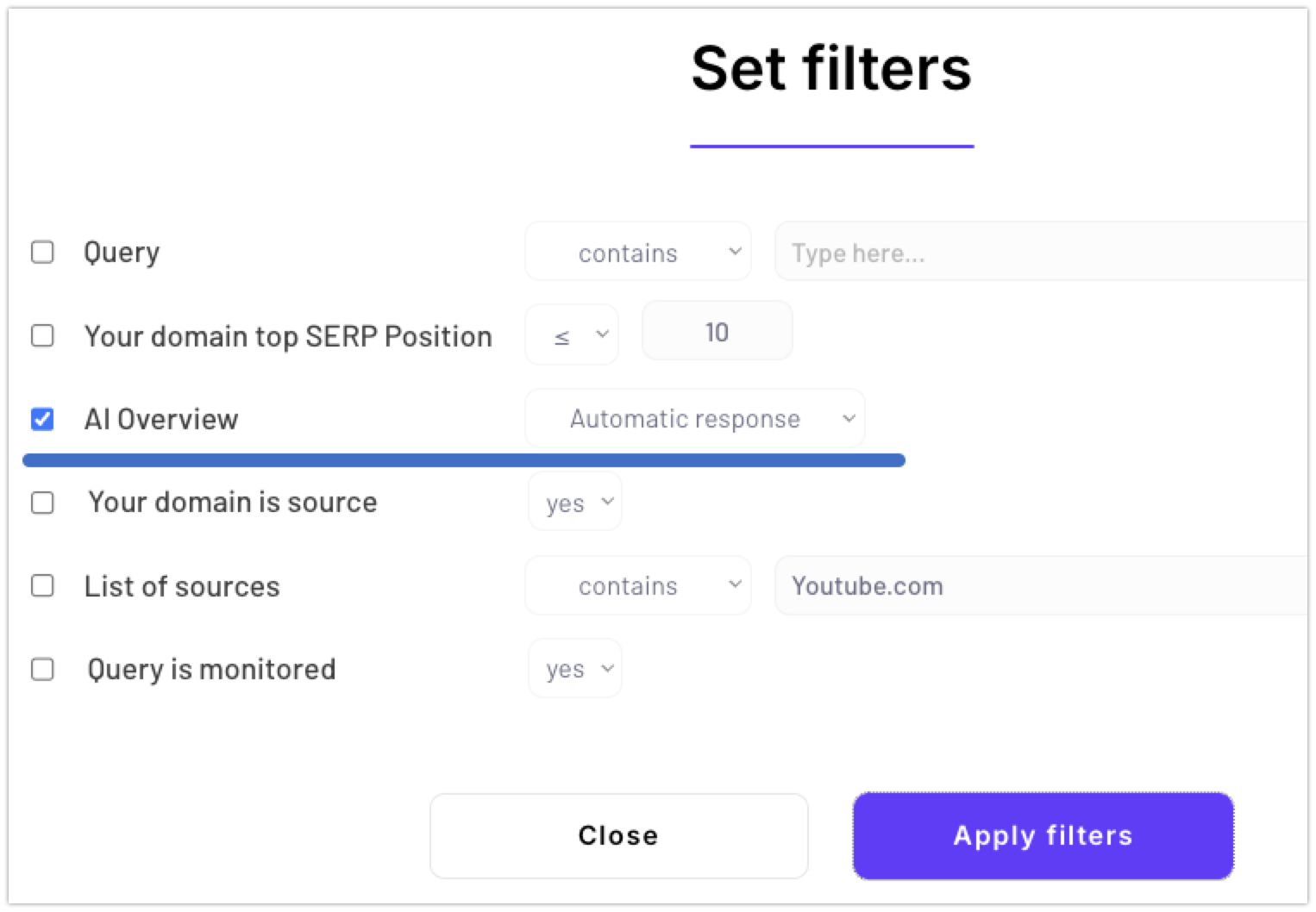
In ZipTie.dev you can easily select a list of keywords generating AI Overviews.
Observation #2: You can leverage YouTube to increase chances of getting featured in AI Overviews
I noticed that sometimes Google can pick YouTube as a source.
For instance, for the query: “celery juice benefits” one of the sources AI Overviews has chosen is a Youtube video.
As many publishers have Youtube channels, they can leverage them to increase their visibility in AI Overviews.
From a technical point of view, for now, it’s not clear to me if Google takes it from the video description on Youtube or from transcription. Taking it from a video description would be much easier for Google. If your Youtube videos aren’t picked up as a source, I would consider adding useful description and see if this makes a difference.
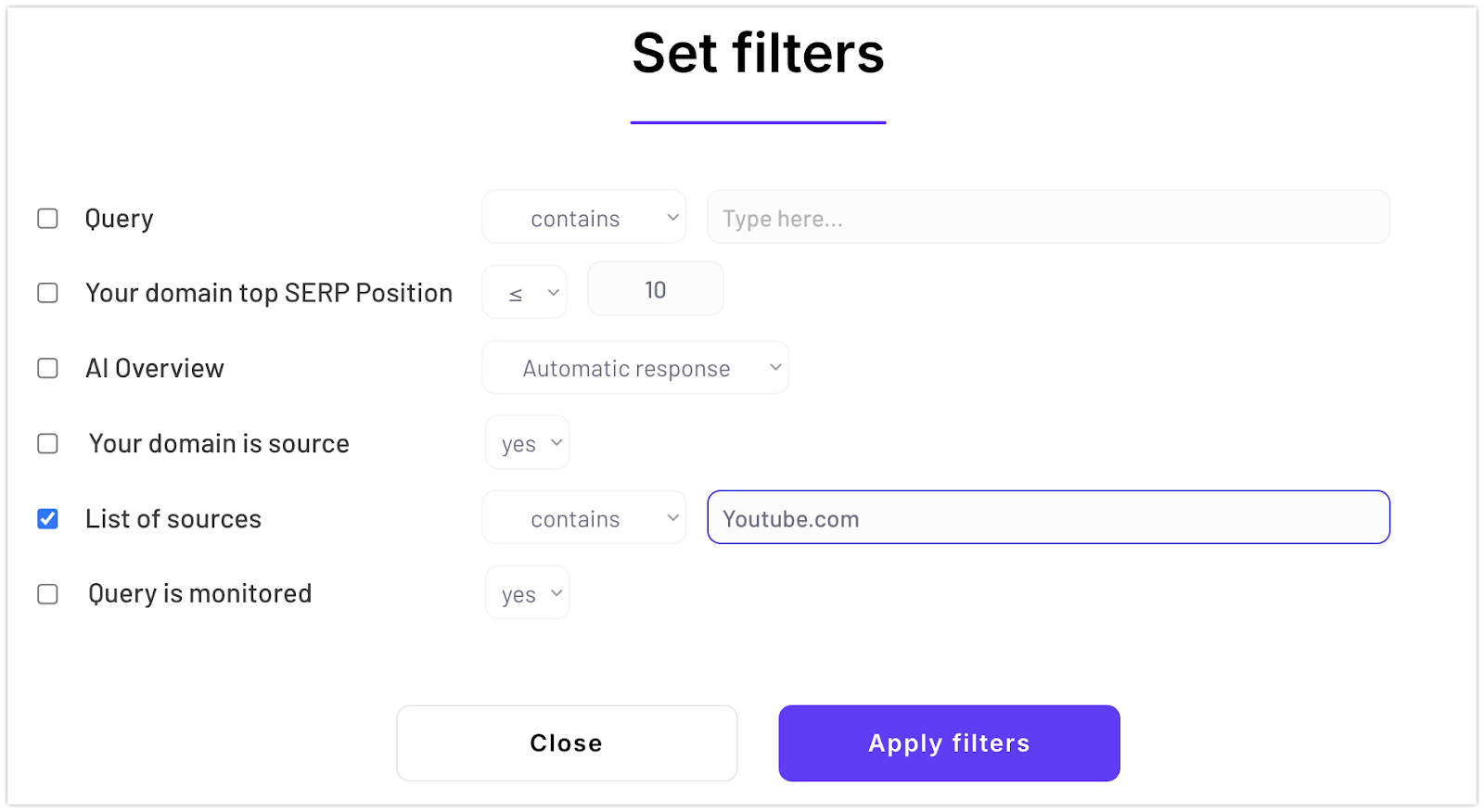
If you are not sure how to check if Google picks up Youtube videos as a source, you can use filters in ZipTie, and select: List of sources contains Youtube.com.
Observation #3: you don’t have to have topical authority to rank in AI Overviews
I didn’t undertake huge studies checking the influence of topical authority for AI Overview presence.
However, I’ve seen many instances of huge brands with no particular topical authority, taking the top places, both in Google traditional results and AI Overviews.
For instance, ZDNet ranks for best smartphones 2024 in both traditional search results and AI Overviews.
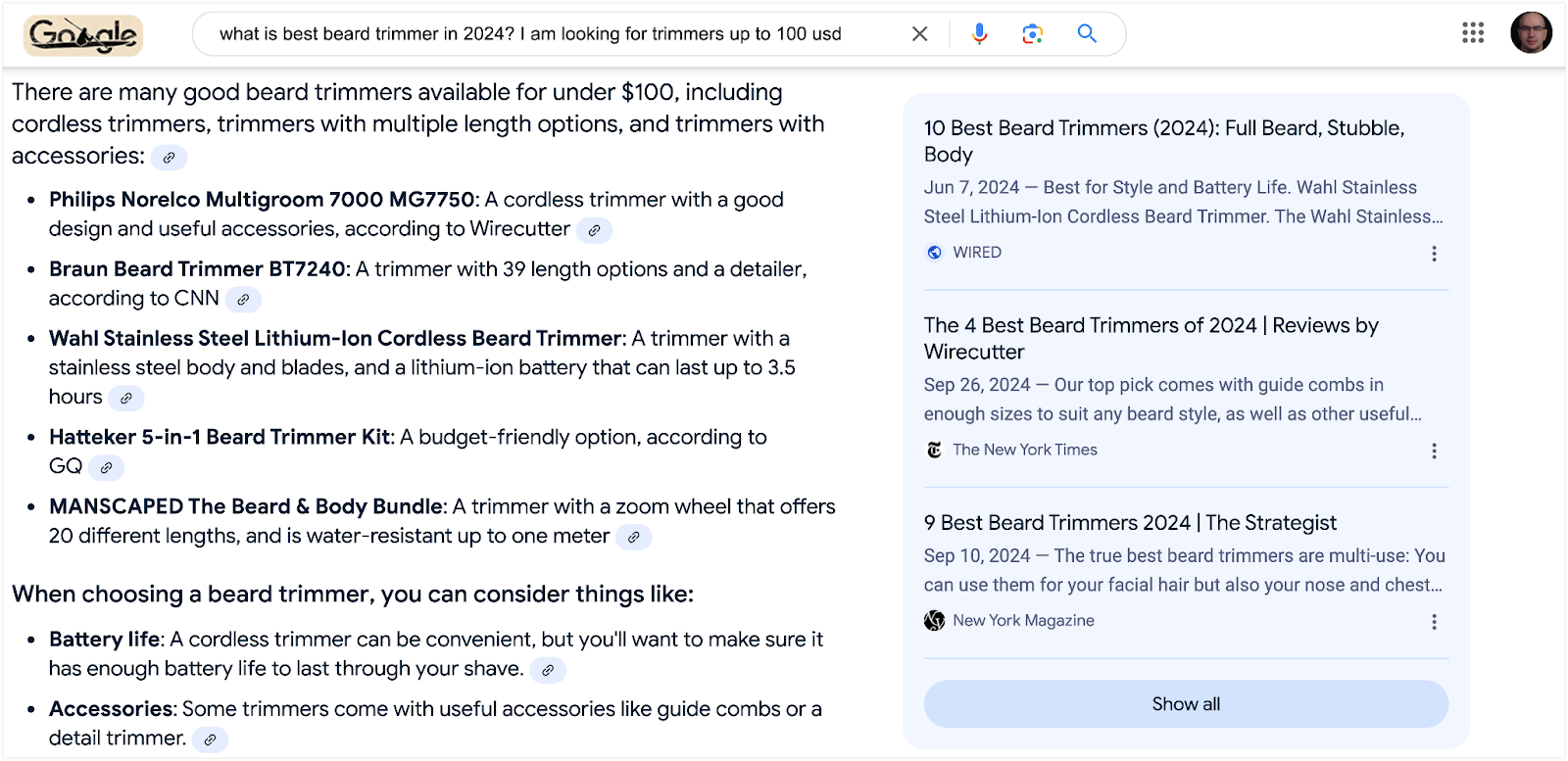
When I type: “what is the best beard trimmer in 2024? I am looking for trimmers up to 100 usd” I can see AI Overviews uses sources such as The New York Times, New York Magazine which are trusted sources, but clearly don’t have topical authority in beard trimmers, or even with testing electronics.
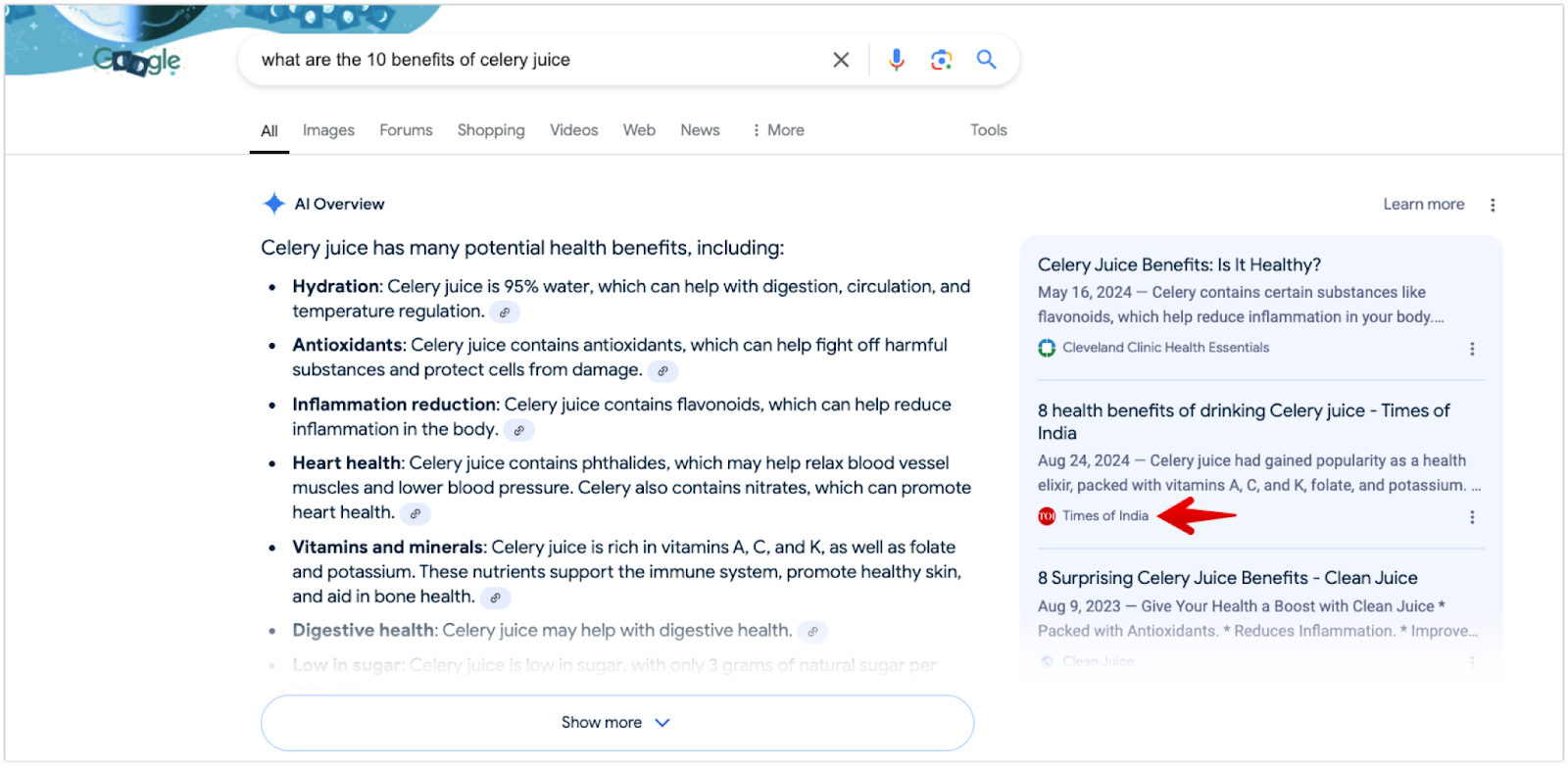
Another example: for the query: “what are the 10 benefits of celery juice” one of the sources selected is The Times of India
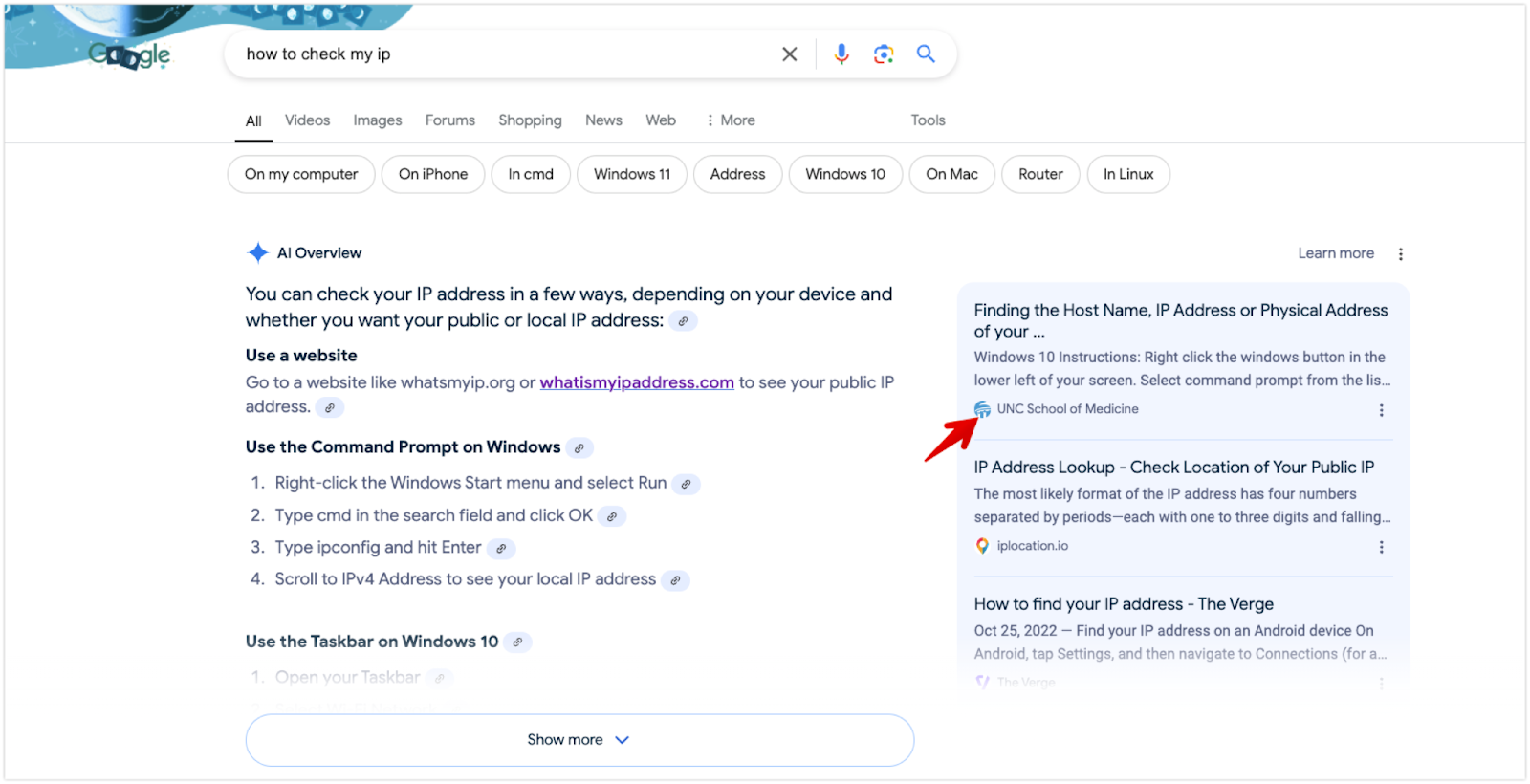
Another example: “How to check my IP”, one of the sources chosen by Google is… UNC School of Medicine. This topic is TOTALLY unrelated to medicine.
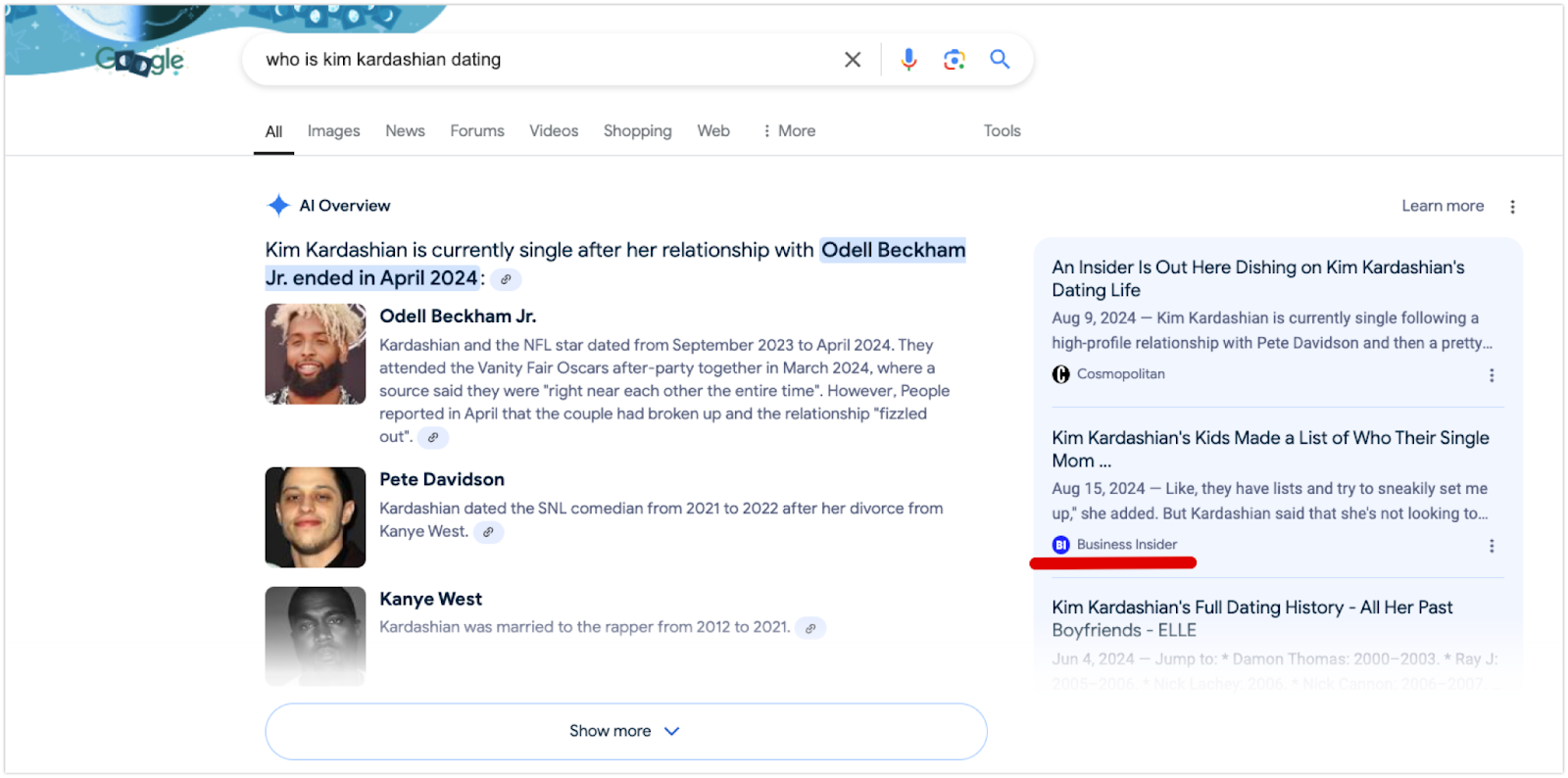
Yet another example: a query: “who is Kim Kardashian dating”:
You can see that one of the sources Google chose was… Business Insider, which clearly has no topical authority within the celebrities & gossip space.
So it seems that having topical authority is not a requirement.
Disclaimer 1:
Obviously, the brands I mentioned have strong brands, so Google may show them despite having no topical authority.
Disclaimer 2:
Obviously, this may change in the future. What you can do is observe trends over time. We have a dedicated landing page for this. It’s available here.
Observation #4 – query selection has an EXTREME effect on the AI Overviews share
This observation is extremely important for people who want to understand the real impact of AI Overviews.
We released a public benchmark that we regularly refresh and we clearly see that AI Overviews are extremely dependent on the sample of keywords. https://dashboard.ziptie.dev/aio-monitor
On top of verticals, such as Publishers, Finance, Health, etc, we have some more detailed horizontal sections.
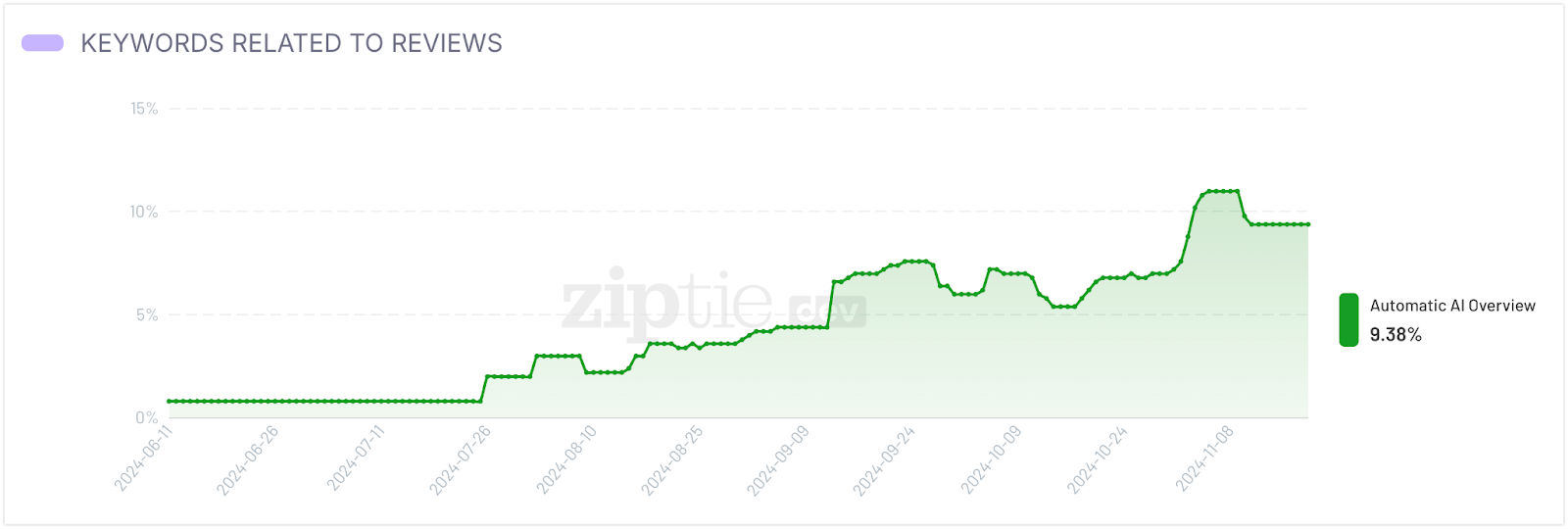
For instance, keywords related to reviews show AI Overviews in just 9% of cases (still 10x more than in July!)
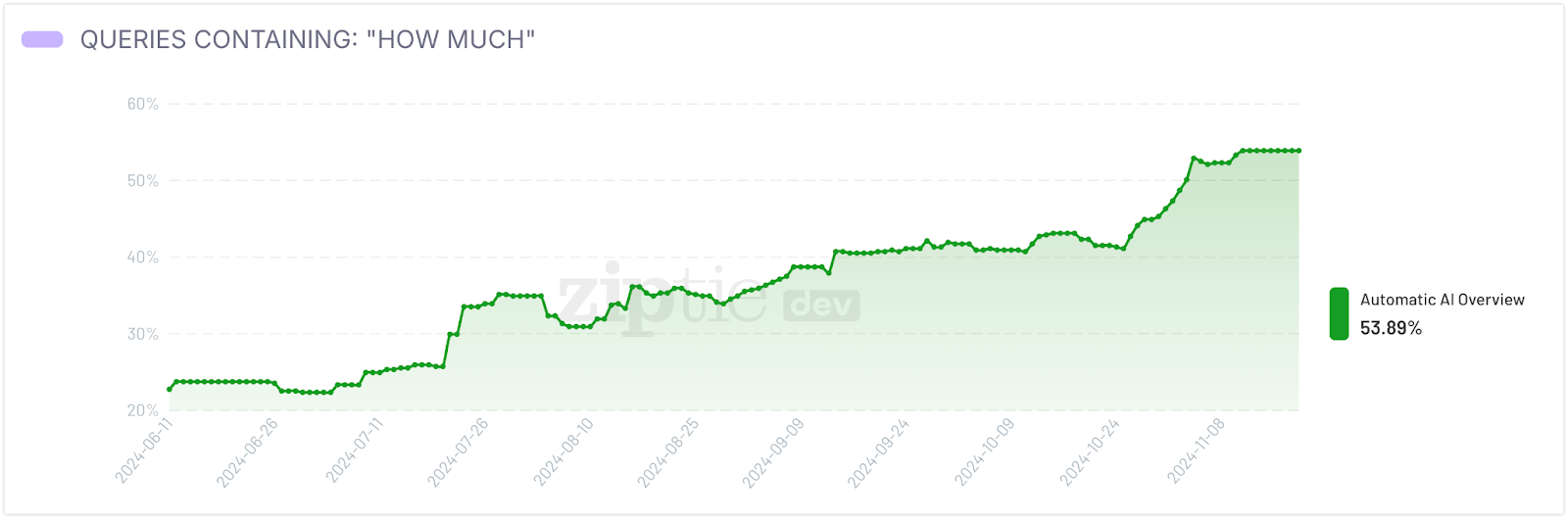
On the other hand, queries related to “how much” are shown for almost 54% of queries.
As an example, I dove deeper into Forbes, and the results are pretty interesting.
Query selection samples
% of queries generating AI Overviews
Top queries having featured snippets
63%
Top queries with minimum 3 words
14%
Top queries with minimum 5 words
39%
Top queries
8.8%
Questions – “what is”
39%
This table gives us very useful information you can use in your strategy of AI Overviews preparation. So it’s clear that query selection has an EXTREME effect on the AI Overviews share.
For instance, you may go with this counter-intuitive idea: not caring that much about top of the funnel keywords as they are unlikely to generate AI Overviews.
Instead, you can focus on informational content (as you can see questions containing “What is” generate AI Overviews in 39%).
Obviously treat this as an idea, not a ready-made strategy.
Obviously, AI Overviews are still experimental and the share of AI Overviews may change dramatically.
To stay on top of the changes, you can use ZipTie.dev.
It’s pretty straightforward. Just paste a list of keywords you want to check and voila’!
You can even set up monitoring to see changes over time.
Heads up: challenges for measuring impact of AI Overviews.
Let’s imagine you publish evergreen articles and they are already bringing you traffic.
The hypothetical list includes:
Best phones in 2024
Best beard trimmer in 2024
10 benefits of celery juice
Then you will see that they generate 0 AI Overviews. You report to your bosses / CMOs, or note that AI Overviews don’t appear for these queries.
This could be wrong.
What I noticed is that AI Overviews are not consistent.
Commonly, even if you don’t see an AI Overview, when you slightly change the wording, you will get AI Overviews.
First example:
“What is best beard trimmer in 2024” is not showing an AI Overview in Google.
But when I slightly change it to:
“what is best beard trimmer in 2024? I am looking for trimmers up to 100 usd” I can see AI Overviews
I can see that Google picks three sources: Wired, The New York Times and New York Magazine.
Second example:
When I type, “10 benefits of celery juice” I get no AI Overviews.
But when I slightly change it to:
“what are the 10 benefits of celery juice” or
“benefits of celery juice “
I get AI Overviews.
My take:
At the moment Google may not show AI Overviews for top of the funnel keywords.
It’s more likely to be shown when it’s clear you’re looking for more information.
It’s not clear if it’s by design, or Google doesn’t want to lose too much money.
Anyways, I believe over time it will become more stable and measuring the impact of AI Overviews will be easier.
Opinion: the biggest factors affecting share of AI Overviews
Google will increase the share of AI Overviews over time. Now it seems to me Google is limited by two factors:
Google is not putting ads in AI Overviews, except for very limited usage. Once they will find a good way to earn money, they will likely increase the share of AI Overviews.
Satisfaction rate. Google just can’t put AI Overviews for every keyword. This would translate to extremely low satisfaction rates. I think that, instead, they need to measure how people react with AI Overviews, and ideally, show AI Overviews for selected keywords.
Ways to stay ahead of the game
We see Google’s statements that the links included in AI Overviews get more clicks than if the page had appeared as a traditional web listing for that query.
My opinion:
We can’t verify the methodology of Google’s measurements. It’s not clear is it the average from websites ranking top 3? Top 10? Or top 50?
But AI Overviews will likely mean fewer clicks, at least for top keywords. I would love to be wrong but I try to be as objective as possible.
However, there are a few points that can increase your brand’s success.
If you don’t rank top 10, by optimizing for AI Overviews you can effectively go to top search results (this way you effectively bypass the top 10). This can translate into more clicks to your website.
AI Overviews is not only a click game, but also a branding and PR one. According to the basic theories of influence by Robert Cialdini, when Google AI Overviews refer to you as a source, in people’s minds your brand can become a trusted source.
It’s clear that the publishing space is one of the industries with the highest share of AI Overviews.
Obviously, AI Overviews (considering their prominent position on top of the results) becomes position 1, catching the most user attention.
To stay on top, I recommend tracking how prominently you show in AI Overviews and trying to optimize your content for AI Overviews.
Don’t treat AI Overviews only as a danger (yes, it is a danger!), but also as a way to increase the visibility of your brand in Google.
For instance, considering that 63% of AI sources don’t come from top 10 traditional search results, it opens room for new possibilities. As AI Overviews appear on top, it could be your way to be on top of search results even if you don’t rank top 10.
A huge thank you to Jes Scholz and Jakub Sawa for their valuable feedback on this article. Your insights from the news SEO world really helped make it better!
FAQ – wrapping up
What are AI Overviews and how do they appear in search results?
AI Overviews are AI-generated summaries that appear at the top of Google search results, synthesizing information from multiple sources to provide comprehensive answers to user queries.
How do AI Overviews affect website traffic and revenue?
AI Overviews may reduce click-through rates since they provide answers directly in search results, potentially decreasing traditional ad revenue. However, being featured as a source can increase brand visibility and authority.
How does AI Overview ranking differ from traditional SEO?
Unlike traditional SEO, AI Overviews focus on finding the best content fragments rather than entire pages. Sources can come from outside the top 10 search results, suggesting different ranking signals are at play.
Do you need topical authority to appear in AI Overviews?
Yes. It’s very rare to see that websites with low topical authority can be featured in AI Overviews.
What role does YouTube content play in AI Overviews?
YouTube videos can be selected as sources in AI Overviews, providing an additional opportunity for visibility through video content and descriptions.
How consistent are AI Overviews across different search queries?
AI Overview appearance varies significantly depending on query type. Informational queries and questions (especially “what is” formats) tend to generate more AI Overviews than top-of-funnel keywords.
What can publishers do to optimize for AI Overviews?
Focus on creating clear, informative content, leverage multiple formats including video, and monitor which query types generate AI Overviews in your niche.
How might AI Overviews evolve in the future?
Google is likely to increase AI Overview prevalence once they develop effective monetization strategies and achieve satisfactory user experience rates.
How AI Overviews Will Affect YMYL Queries
I recently explored how AI Overviews impact keywords related to “Your Money, Your Life” (YMYL) queries.
Specifically, I focused on how frequently AI Overviews appear for questions, such as “Which car has the highest safety rating?”
I examined several important life and financial topics: customer rights, car safety rankings, and medical issues such as heart attack symptoms and cancer. The results were quite surprising.
Google IS NOT hesitant to generate AI Overviews for these crucial queries.
Frequency of AI Overviews in YMYL Topics
Here’s how often AI Overviews appeared in my research:
Customer Rights: 66%
Car Safety Ratings: 53%
Heart Attack Symptoms: 81%
Cancer: 70%
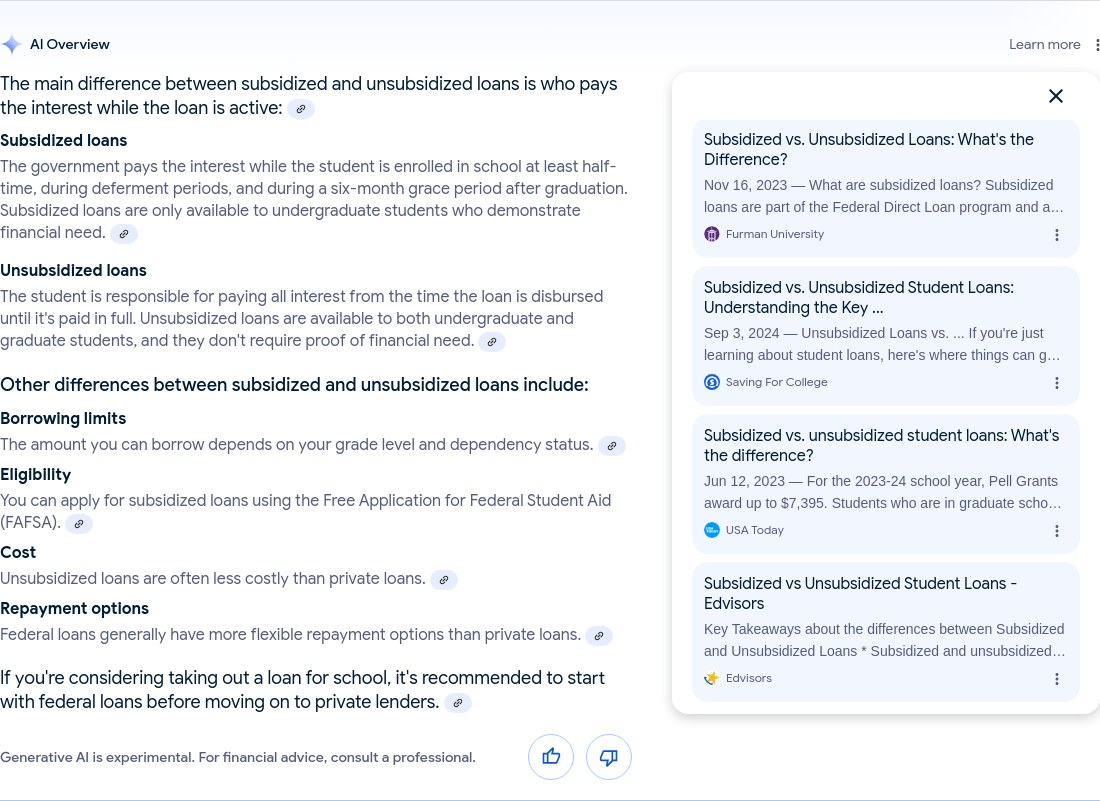
Loans: 43%
Sample queries analyzed
For ref, here are some of the specific queries I used in my analysis:
Who do I contact about consumer rights?
What are my consumer rights when a mortgage is sold?
Which car has the highest safety rating?
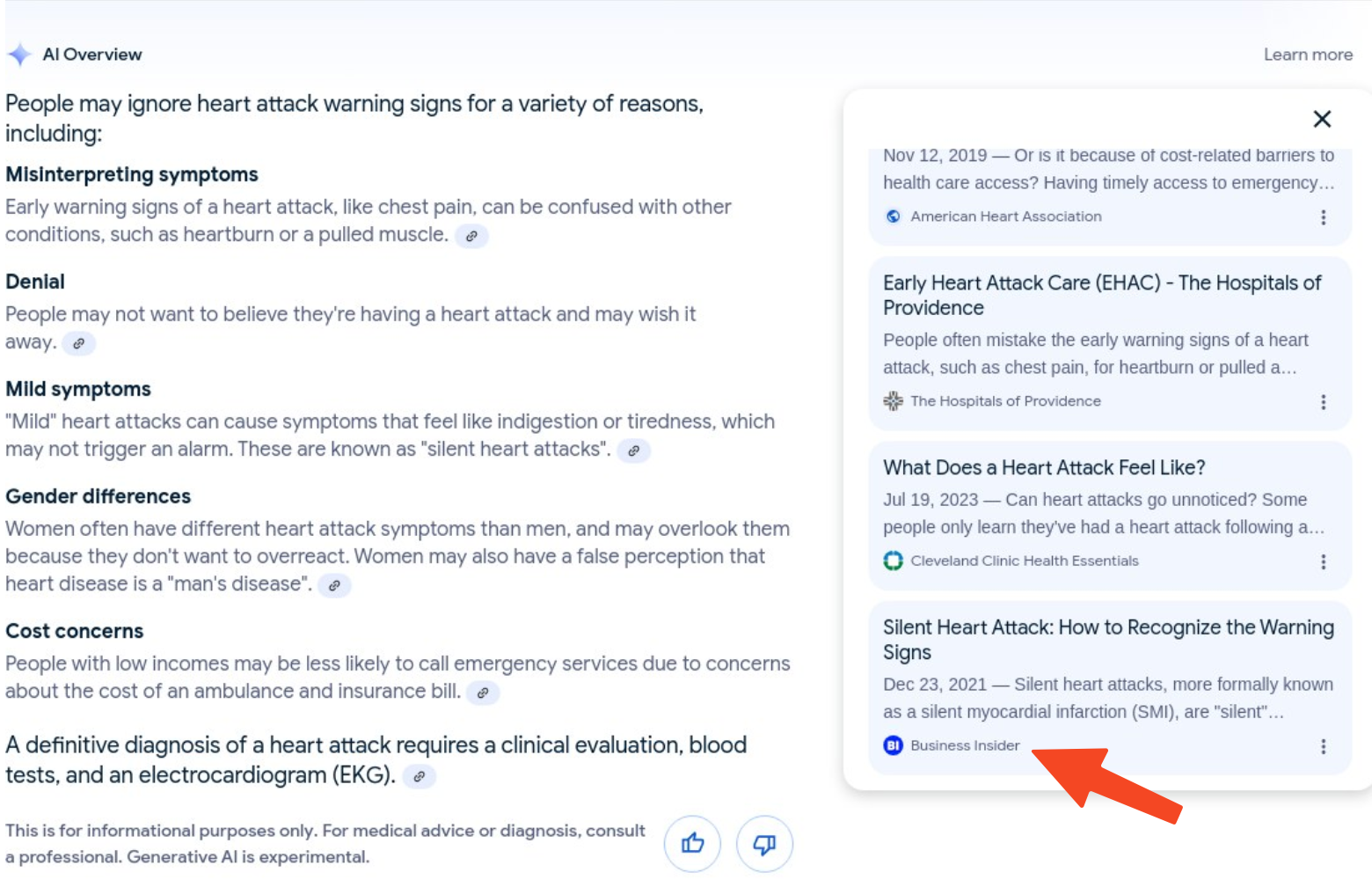
Why do people ignore heart attack warning signs?
What car has the worst safety rating?
Identified Issues
During my review, I noticed several significant problems with AI Overviews:
Outdated Sources
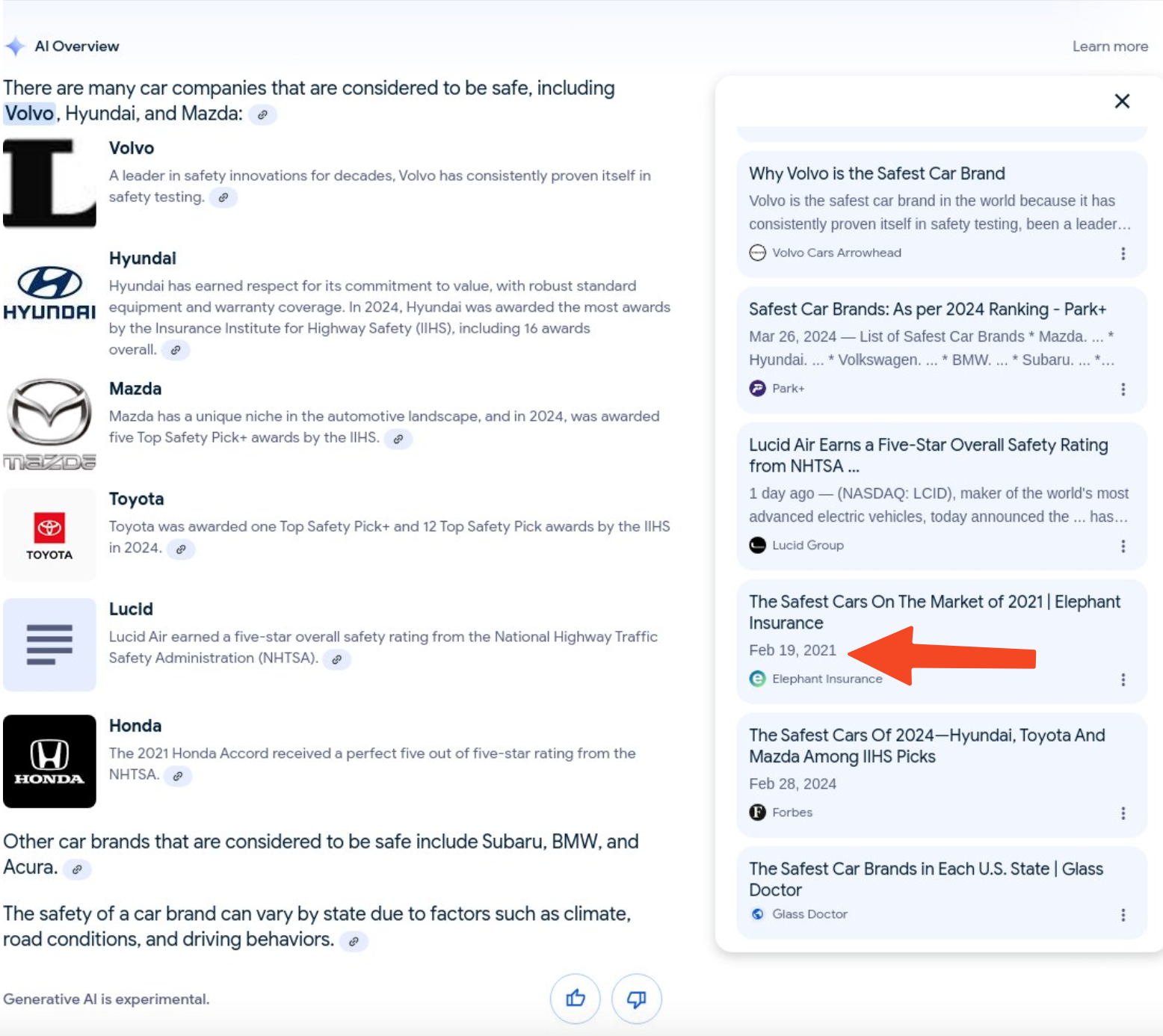
For instance, for the query regarding which car company has the highest safety rating, one source I found was from 2021. Given the rapid advancements in automotive safety technology, this information is likely outdated and could mislead users.
2. PR Management Concerns:
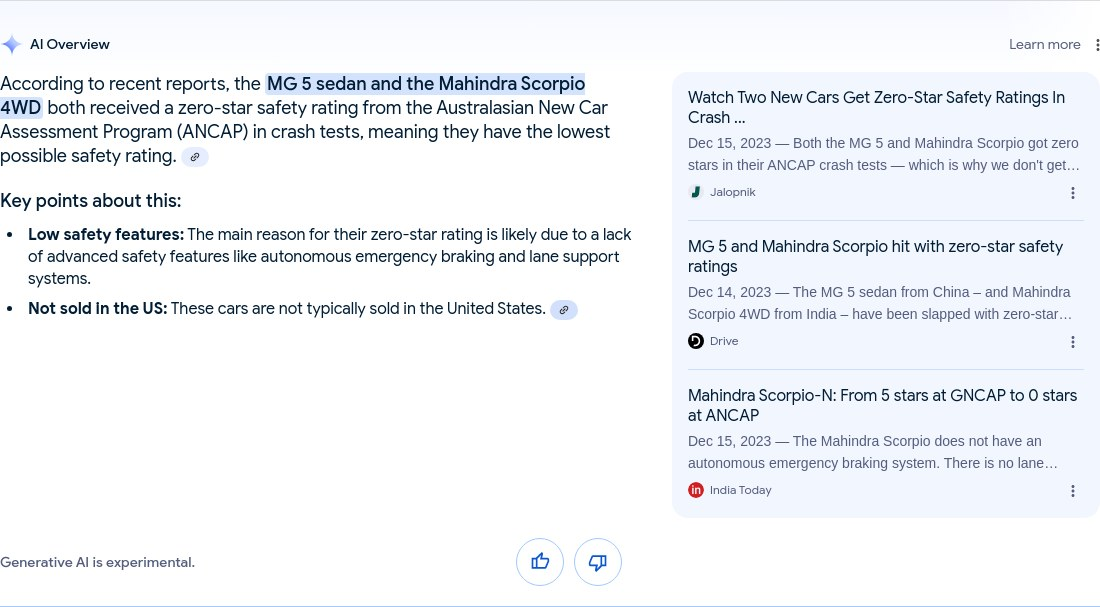
In response to the question about cars with zero-star safety ratings, Google provided a list of specific vehicles.
While the Australasian New Car Assessment Program (ANCAP) is a legitimate organization, this raises concerns about potential negative publicity for brands and products online.
3. Irrelevant Sources:
For the query about why people ignore heart attack warning signs, one of the sources cited was Business Insider. Although it is a trusted source for business news, it may not be an appropriate reference for medical advice.
4. Obscured Source Information:
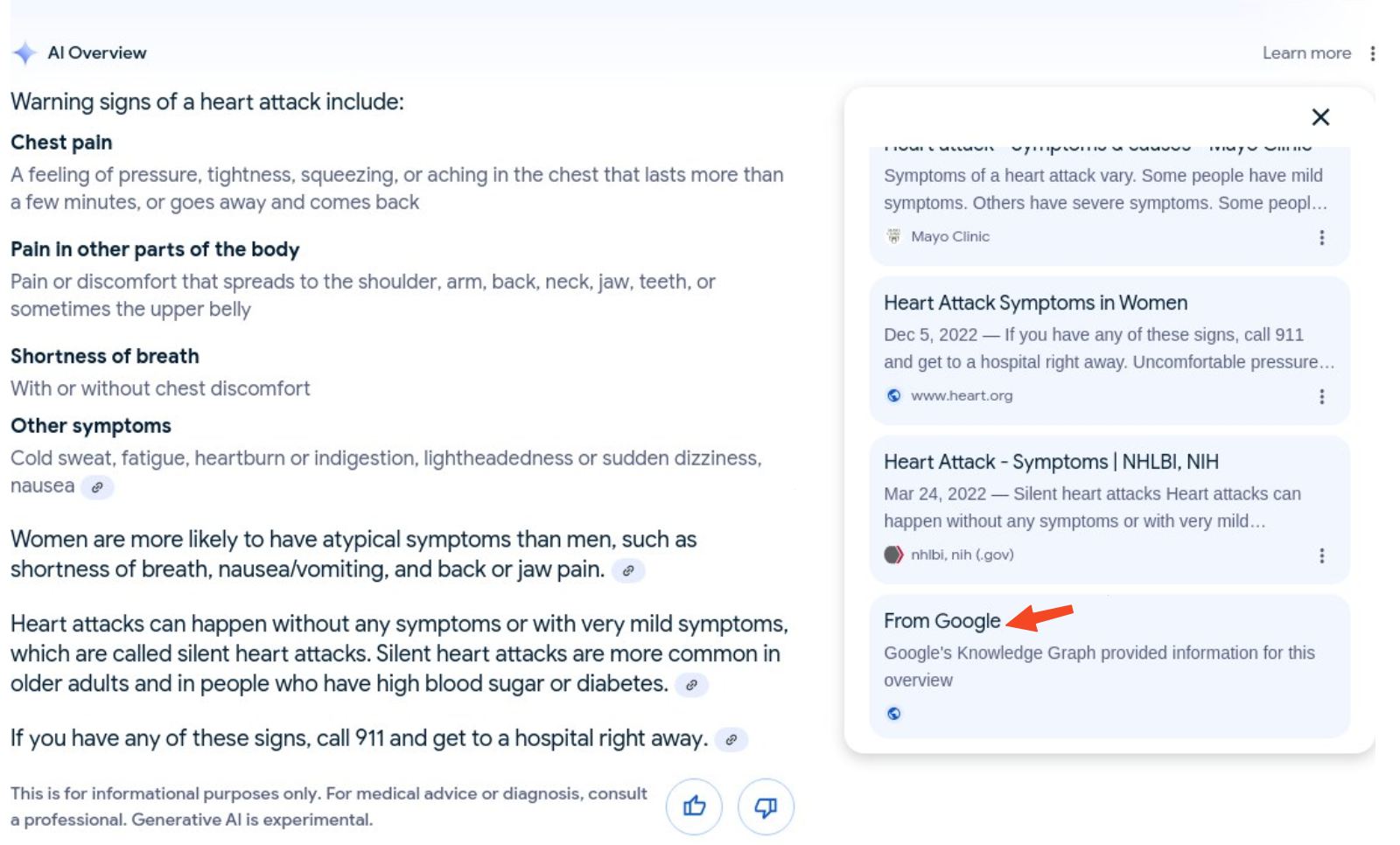
In response to the question about heart attack warning signs, one of the sources listed was Google Knowledge Graph.
While this project is impressive, at least for me, it doesn’t serve as a reliable source since it represents Google’s internal knowledge rather than an external reference.
Additional tip – opportunities for large publishers
Some queries showed that Google tends to favor large publishers as sources. This preference likely stems from their popularity and credibility on general topics, which could overshadow smaller websites that specialize in these areas.
FAQ
How frequently do AI Overviews appear in YMYL queries?
Recent research shows varying frequencies across different YMYL topics. Customer rights queries show AI Overviews 66% of the time, car safety ratings 53%, heart attack symptoms 81%, cancer-related searches 70%, and loan information 43%. These frequencies indicate Google’s significant use of AI Overviews even in sensitive YMYL areas.
What are the main issues with AI Overviews in YMYL content?
Several critical issues have been identified: 1) Outdated sources, such as 2021 car safety ratings that may not reflect current standards, 2) PR management concerns when listing specific low-rated products, 3) Inappropriate source attribution, like Business Insider being cited for medical information, and 4) Obscured source information, particularly when referencing internal knowledge bases rather than external expert sources.
How can content creators adapt to AI Overviews in YMYL searches?
Content creators should focus on producing specialized, high-quality content with expert backing and original research. This includes ensuring current information, proper source attribution, and clear formatting. Additionally, implementing schema markup and optimizing for AI readability while maintaining authoritative content is crucial.
What are the ethical implications of AI Overviews in YMYL queries?
AI Overviews in YMYL queries raise significant ethical concerns regarding accuracy, transparency, and reliability. These systems must maintain high standards for fact-checking, clear source attribution, and balanced information presentation. The potential impact on user health and financial decisions makes these considerations particularly critical.
Conclusion
AI Overviews are appearing quite often when people search for important topics about money and health. This clearly shows the direction Google wants to follow – AI Overviews can appear on various types of queries, and Your Money Your Life is not an exception.
However, there are significant issues related to source selection that should be fixed.
Fixing these problems is really important. We need AI Overviews to provide accurate and reliable information. We also need to ensure that people who create content can still do their work. As AI improves, we must keep a close watch on it. We should speak up and advocate for ways to make the information more trustworthy. This way, people can receive the right help for their health and financial issues. In the end, this will help everyone become better informed.
Trends in AI Overviews
AI Overviews have experienced significant fluctuations. Just before their public launch, they were appearing in 80% of queries. However, on the release date, there was a noticeable drop.
Now we see AI Overview are slowly gaining their prevalence.
We decided to monitor AI Overviews regularly to determine which types of keywords generate them.
Now we would like to share it with you.
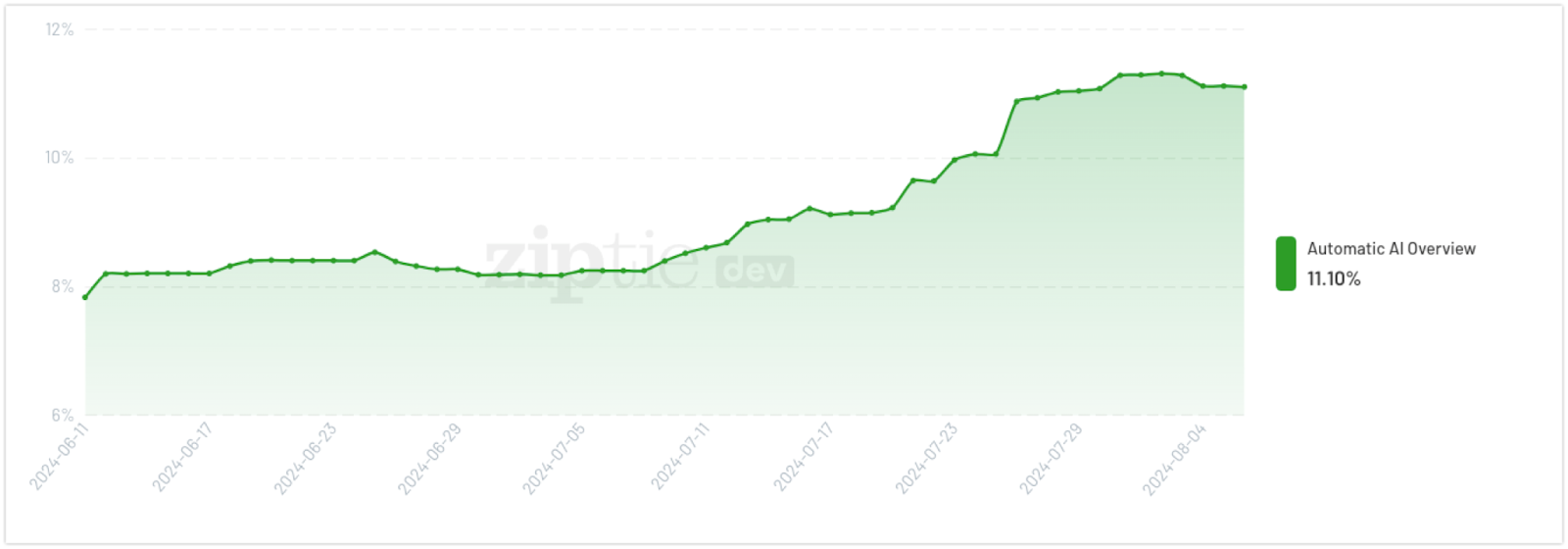
Observation: share of AI Overviews: 11%
It rose from 8% in mid June to 11% in August:
Variations by Industry
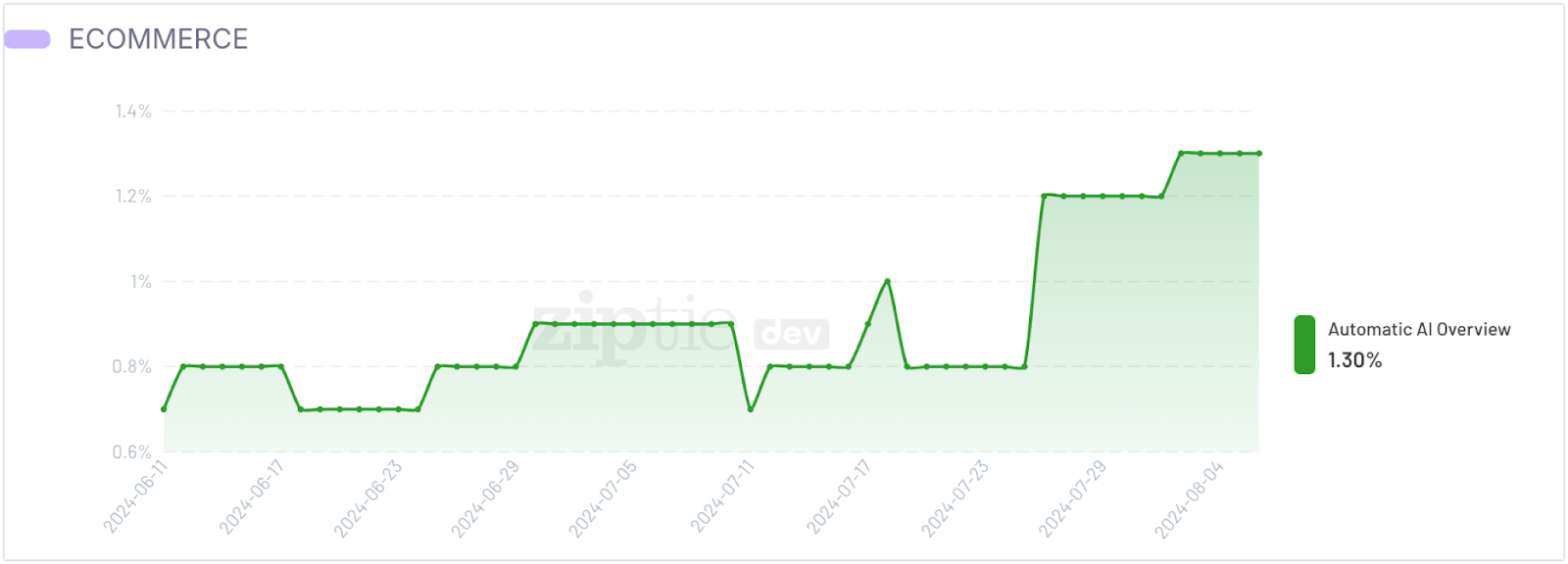
AI Overviews appear differently across industries. For instance, in ecommerce, only 1.3% of queries generate AI Overviews.
The reason is simple: Google does not show ads in AI Overviews. For Google, the choice is clear—generate revenue or not. We anticipate that once Google finds a way to include ads, the prevalence of AI Overviews in ecommerce will likely increase.
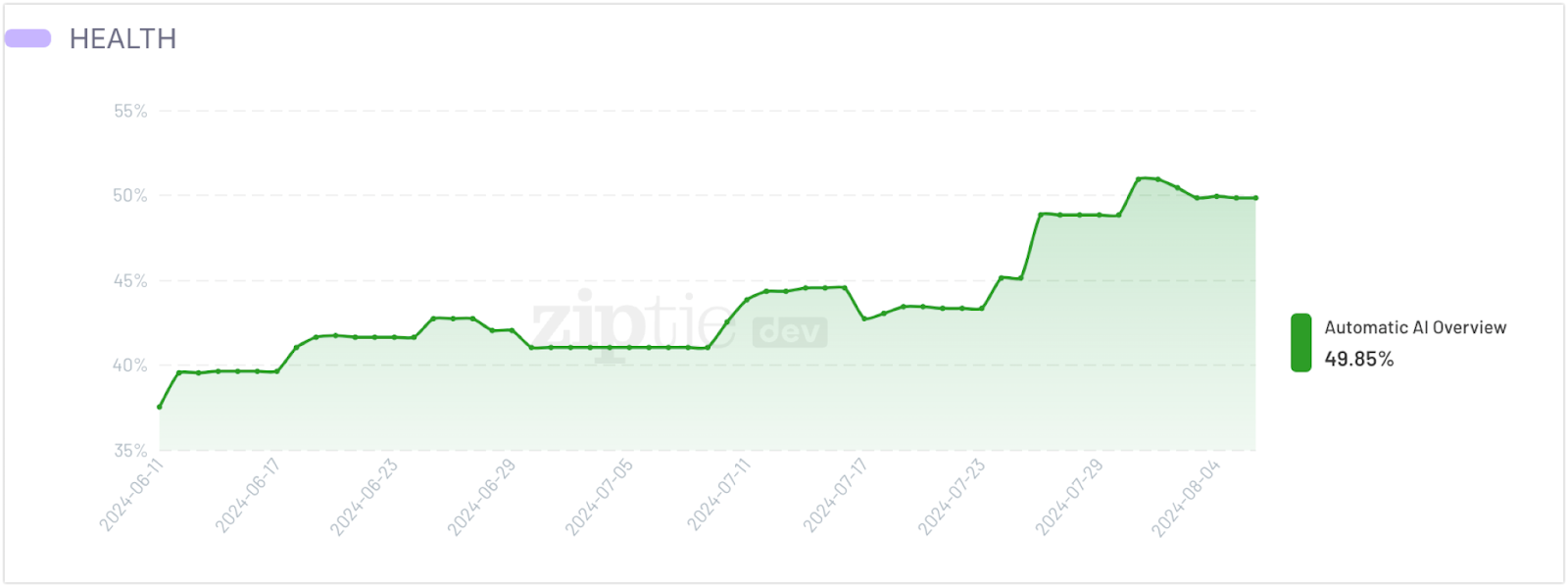
Conversely, in the health industry, Google frequently displays AI Overviews, with around 50% of queries showing them.
Observation: specific search types generate more AI Overviews.
Certain types of searches are more likely to generate AI Overviews.
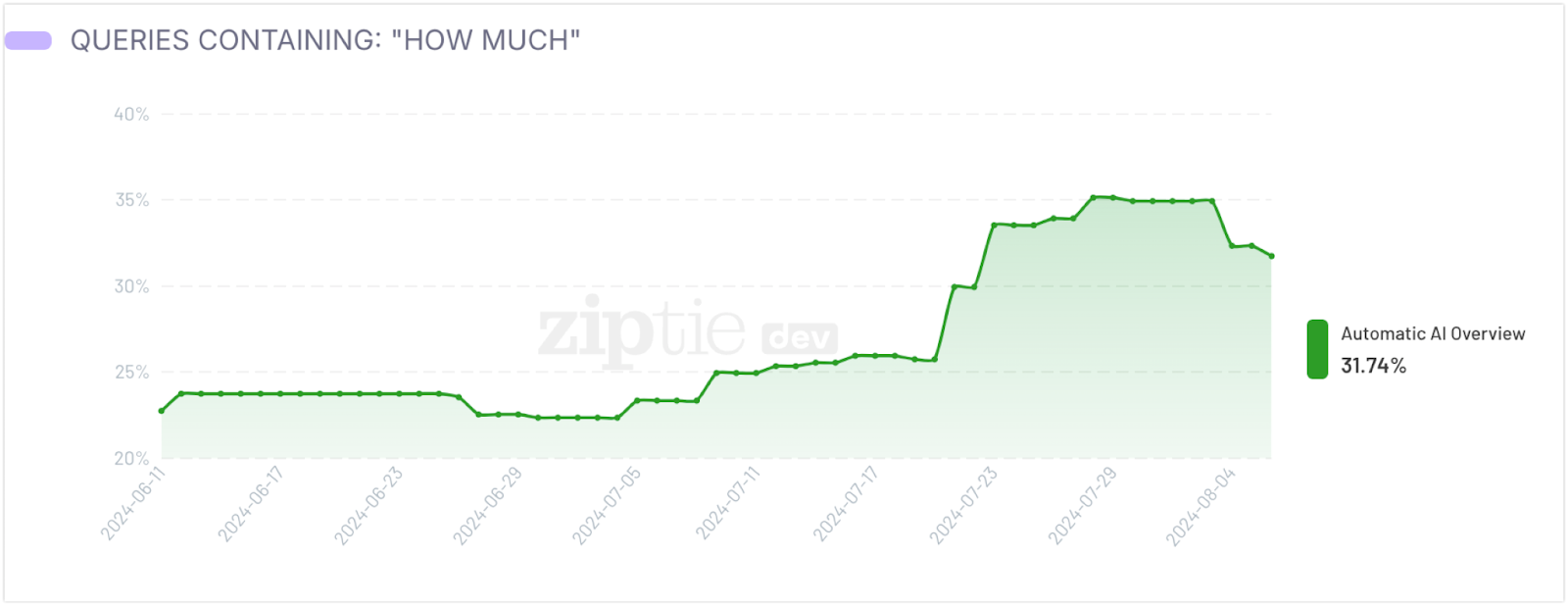
For example: “How much” queries: Over 31% have AI Overviews
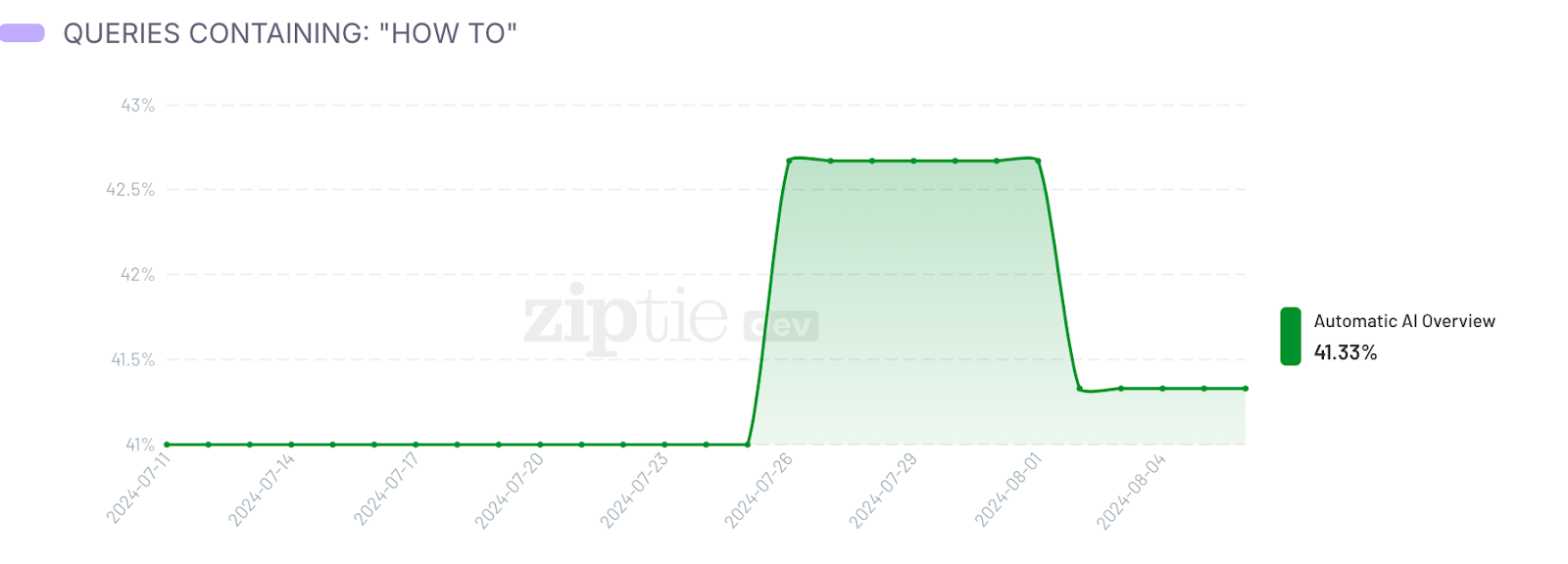
“How to” queries: Over 41% have AI Overviews
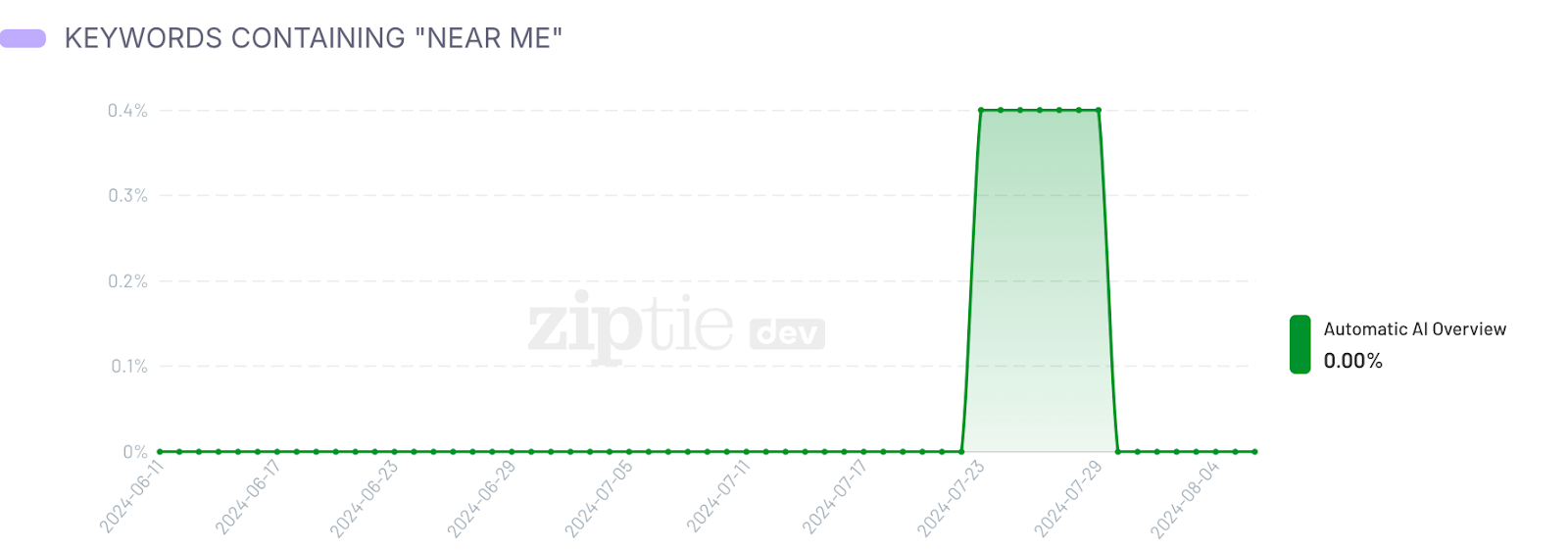
In contrast, searches containing “near me” do not generate AI Overviews based on our sample data.
Regular Data Monitoring
We regularly track multiple segments and industries, including ecommerce, beauty, food, finance, publishers, and hotels. You can always find the latest data on our dashboard.
Our prediction is that Google will increase the number of AI Overviews over time. Eventually, they will find a way to monetize content within AI Overviews through ads. This will likely lead to an increase in AI Overviews in niches like ecommerce and beauty.
To see how AI Overviews might impact your website, start a free 14-day ZipTie trial. This will allow you to see which queries generate AI Overviews and assess your brand’s performance. We are working on something special and will share more details in the near future!
Tracking competitors in AI Overviews using ZipTie.dev
Tracking your competitors in AI Overviews helps you see where you stand. For example, if your site shows up in AI Overviews 2% of the time but a competitor shows up 20% of the time, you know there’s room for improvement.
Plus, if you find a competitor that’s doing really well in AI Overviews, you can learn from them. Try to figure out what they’re doing right and apply those insights to your own site to boost your success.
Using Ziptie.dev to track competitors
There are two ways to track your competitors using ZipTie.
1. Track competitors separately
This approach gives you the most detailed view of how each competitor is performing. Here’s how you can do it:
Create a list of keywords relevant to your niche. You can use tools like Google Search Console or Ahrefs to find keywords that matter to your audience.
Set up separate projects for each competitor in ZipTie.
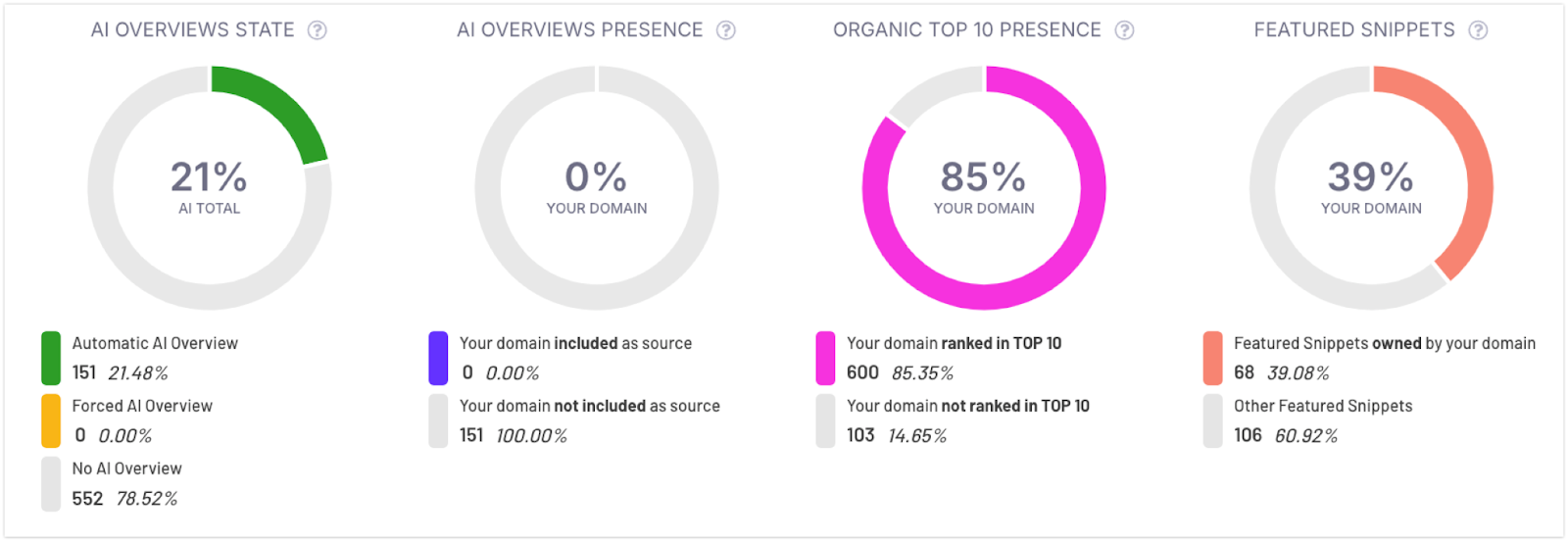
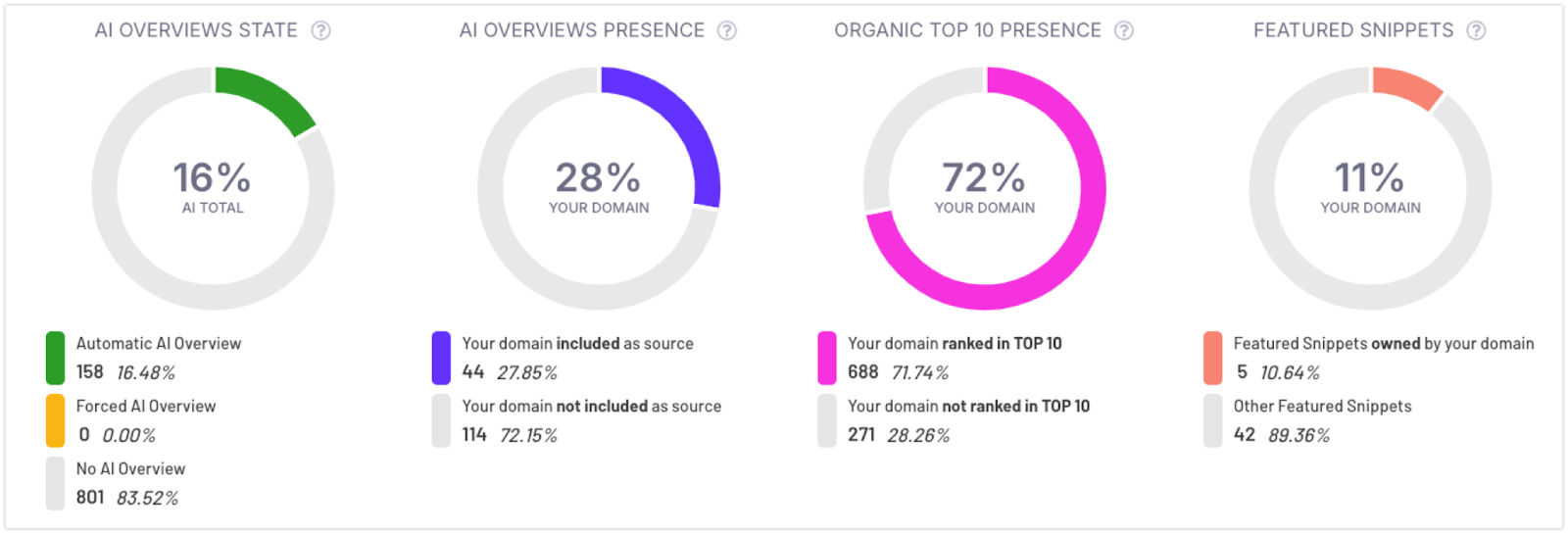
Now you can analyze detailed stats for each competitor. For example, you might find that a competitor ranks in the top 10 for 85% of the keywords but doesn’t appear in AI Overviews at all.
This clearly indicates that this competitor is not successful in AI Overviews, but using this method you will likely find clear winners of AI Overviews, for example:
If you find a competitor that’s doing really well in AI Overviews, you can learn from them. Try to figure out what they’re doing right and apply those insights to your own site to boost your success. I will show you how to do it later in the article.
2. Use a single project
If you prefer a more streamlined approach, you can use a single project to track your site and then see (in the competition tab) who’s winning. Here’s how:
Set up a project for your site. Start by setting up a project for your own site in ZipTie. Add your list of keywords to this project.
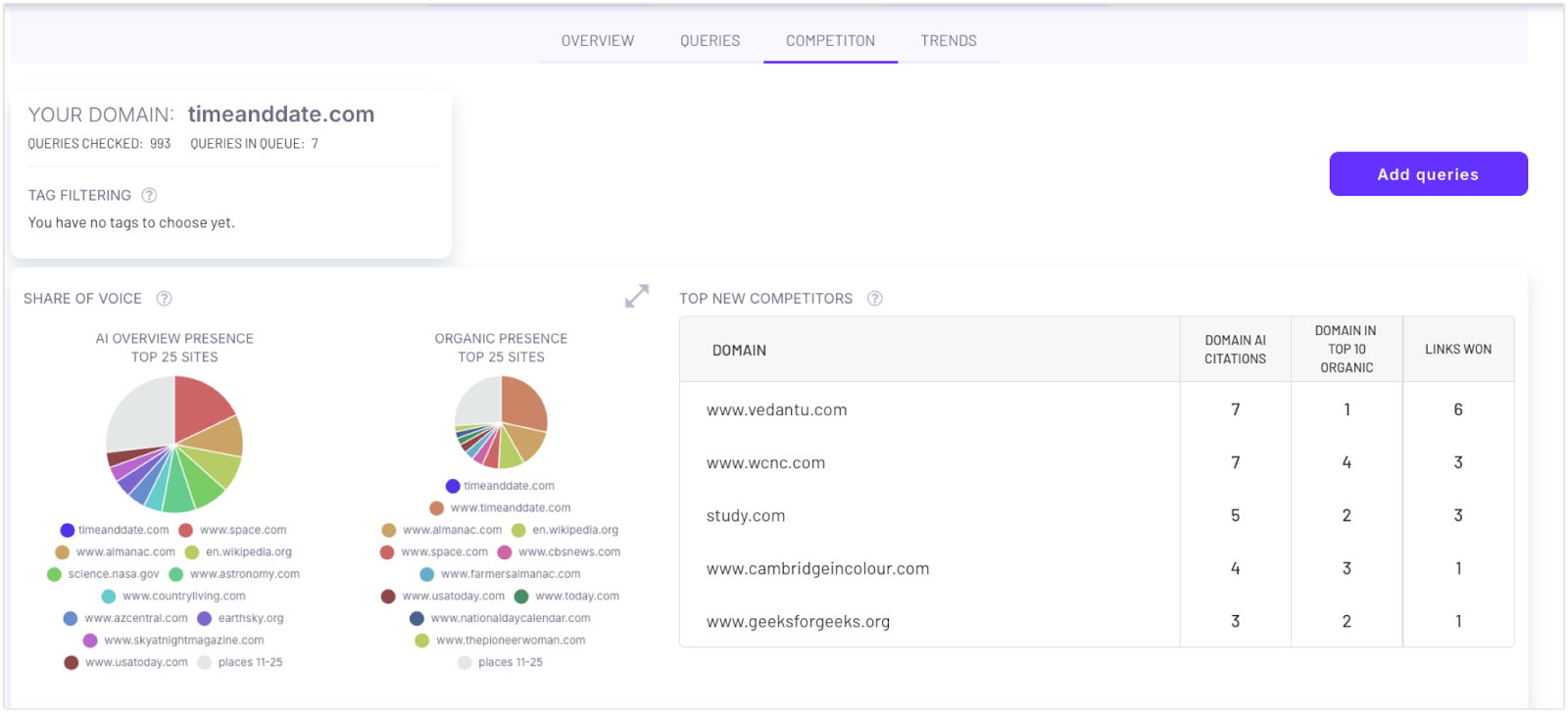
Identify and analyze the winners and losers. To do so, go to the Competition tab:
Here’s the zoomed-in version of the chart:
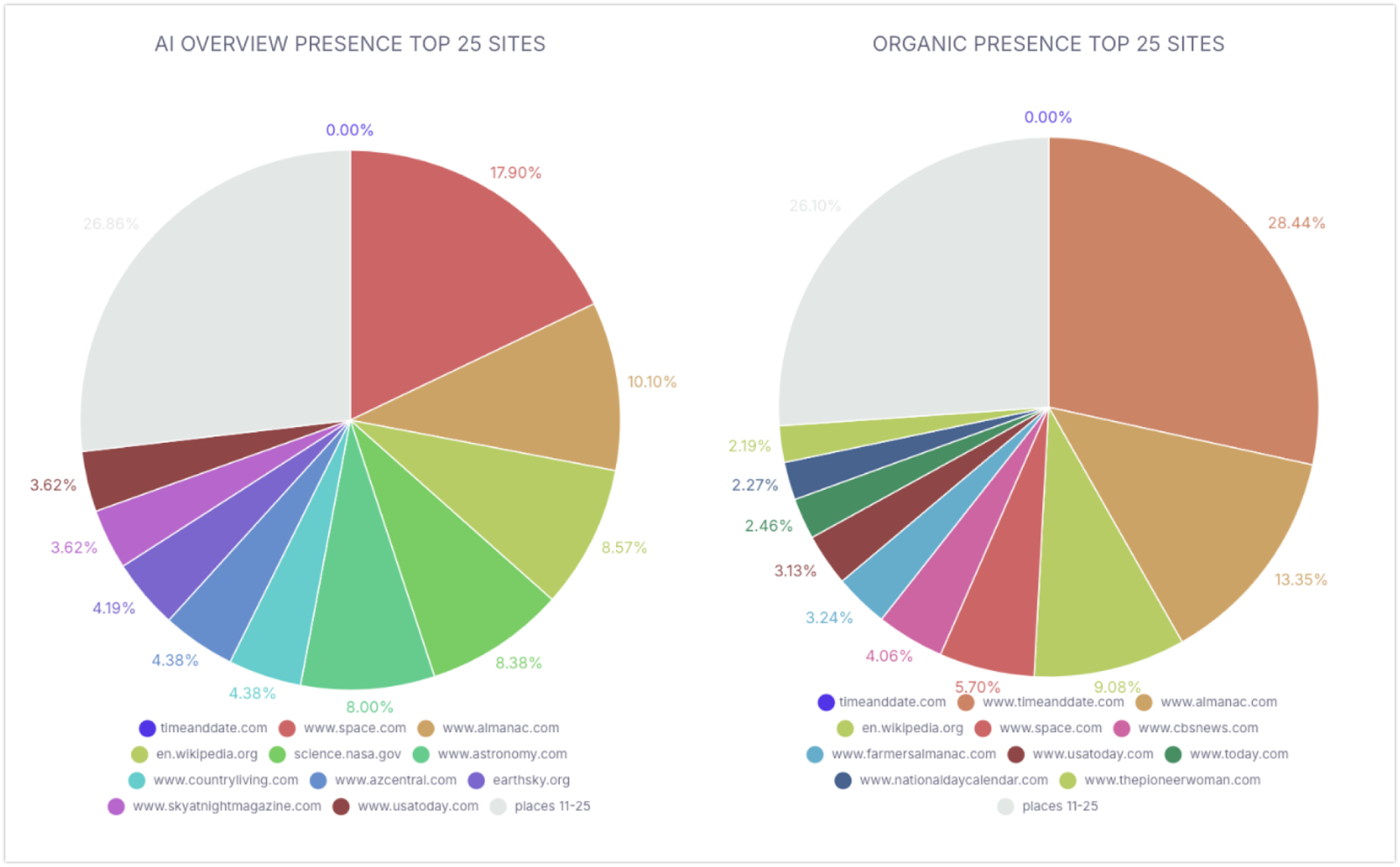
In the Competition tab, you can quickly see how well your competitors are doing in AI Overviews compared to organic search. This gives you a quick overview of who’s winning and who’s losing.
For example “Space.com” and “science.nasa.gov” have significantly increased their presence in AI Overviews compared to traditional organic rankings.
P.S. If you prefer table view, just scroll to see the table version.
Learning from the data
Once you have the data, it’s time to learn from it and improve your own content.
Try to understand why competitors are winning: look at the content of the competitors who are doing well in AI Overviews.
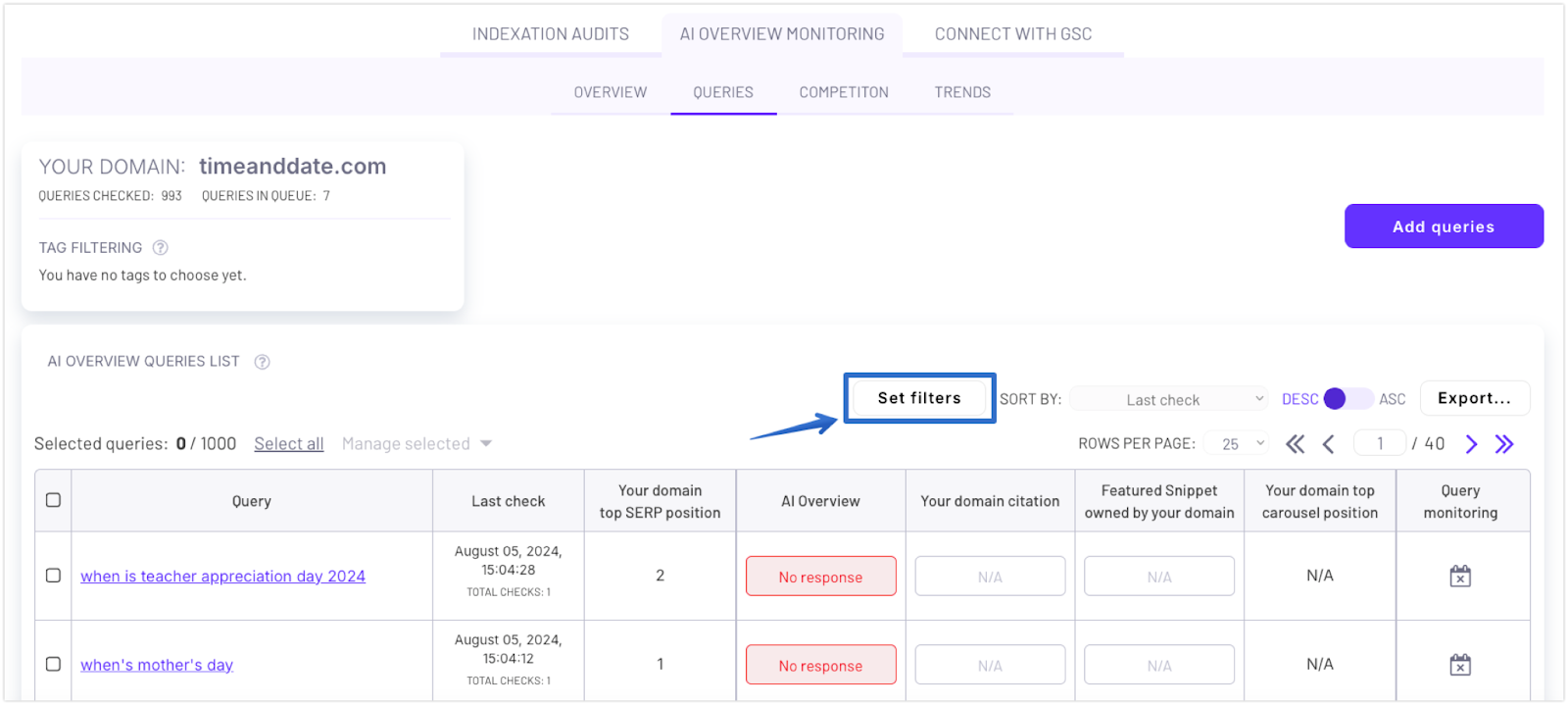
In the previous step we identified a list of winners. Now go to the Queries tab and select: “set filters”.
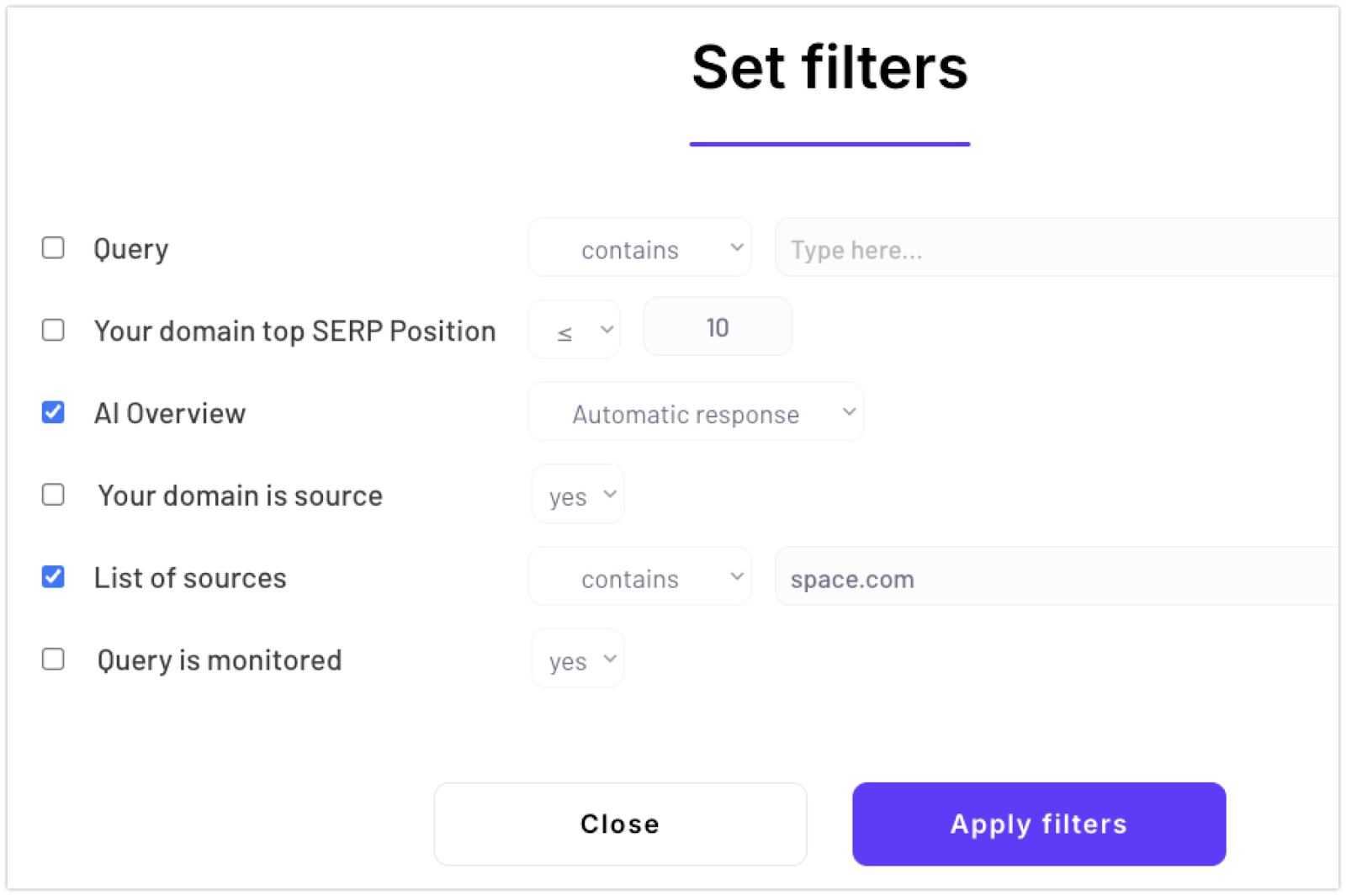
Then select filter: “list of sources contains: “space.com” (the domain we identified as an AI Overviews winner).
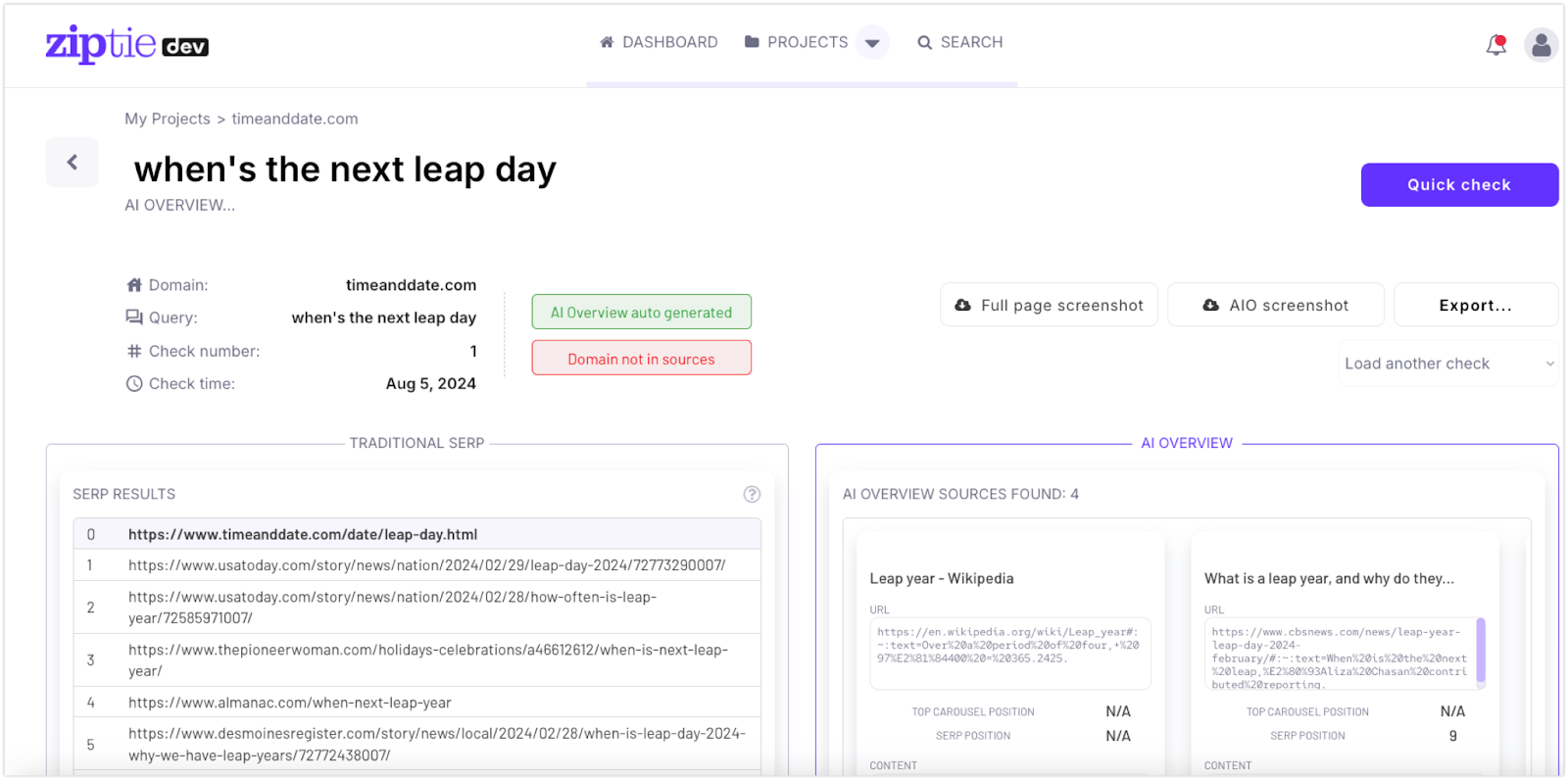
Then you can select any keyword and get more information: you will see an AI Overview screenshot, list of AI overview sources.
Now there are two strategies you might want to try:
Understand why Google chose their content. Is it more relevant? Or maybe it’s of a higher quality? Does it answer the query better?
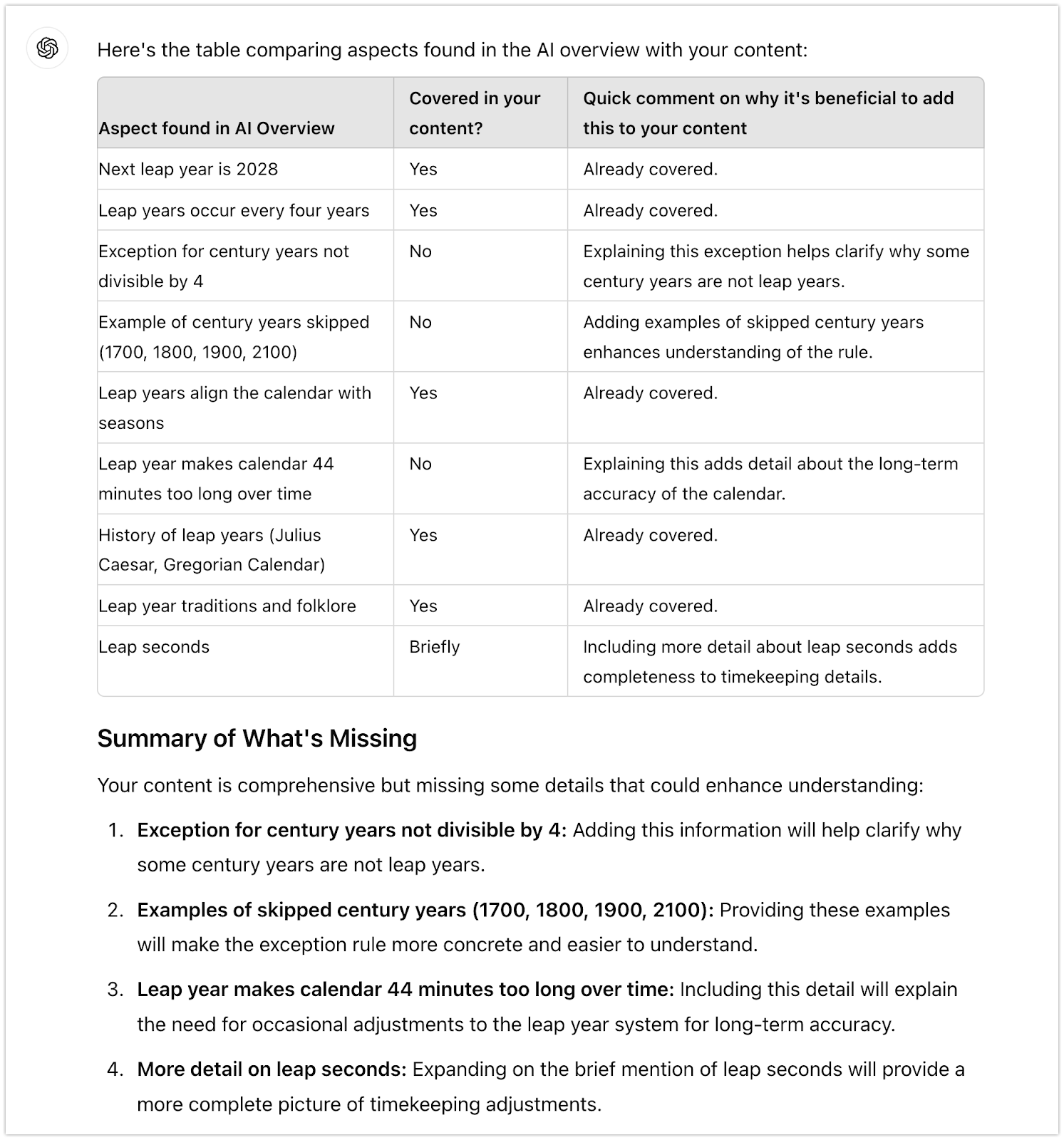
Compare your content to the AI Overview and see what’s missing. You can use tools like ChatGPT to help identify gaps.
Try this sample prompt:
Take two things into consideration. AI Overview and my content. Then create a table: – first column: Aspect found in AI overview – second column: is it covered by my content? – third column: quick comment why it’s beneficial to add this to my content. Give a short summary on what’s missing. Here’s AI Overview: “”” {paste AI Overview here} “”” Here’s my content: “”” {paste your content here} “””
ChatGPT will give you a couple of ideas on how to improve your content:
Then you can optimize your content by using the insights you’ve gained.
Once you fix your content, request indexing and see if this strategy works for your website. This will increase your chances of being featured in AI Overviews.
Keep an eye on things
Remember, AI Overviews can change just like regular search results. It’s essential to keep monitoring to see who’s winning and losing over time. ZipTie makes it easy to set up monitoring so you can stay on top of changes.
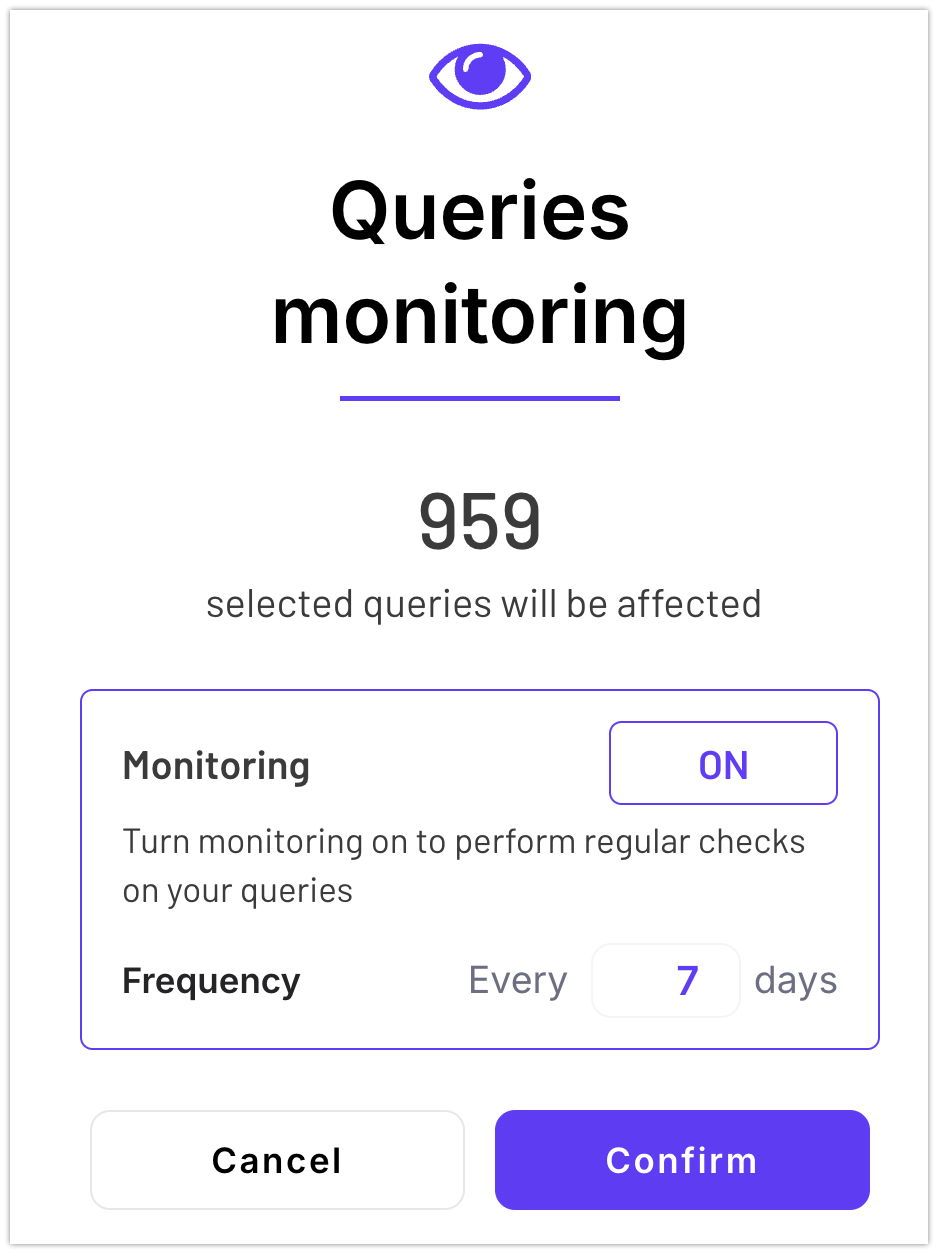
In ZipTie, you can set up monitoring to check the queries regularly. This way, you’ll see changes quickly and can adjust your strategy as needed.
If you see a competitor gaining ground, analyze their content and see what you can learn from it.
Putting it all together
By following these steps, you can get a leg up on the competition and make sure your content is ready for AI Overviews when they roll out in your area. Here’s a quick recap:
There are two options to track your competition:
track competitors separately:
Use a single project to track your competitors all in one place.
Learn from the data: understand why competitors are winning, compare your content, and optimize it based on the insights.
Keep monitoring: set up regular monitoring in ZipTie and adjust your strategy based on the data.
Get started with ZipTie, track your competitors, learn from the data, and keep optimizing your content. You’ll be ready to take full advantage of AI Overviews and boost your online presence. You can start a free 14-day trial now!
Happy tracking!
ZipTie.dev Main Features: Your AI Search Monitoring Solution
Ziptie.dev has evolved from a technical SEO tool into one of the most comprehensive AI search monitoring and optimization platforms available today. This guide walks you through ZipTie’s key features and discusses how to use them to improve your brand’s visibility in AI-powered search engines.
Understanding Your AI Search Performance at a Glance
Getting started with ZipTie is straightforward. You simply provide the platform with important search queries related to your business, or let ZipTie’s built-in query generator create them automatically. The platform then generates clear, actionable reports that answer three critical questions:
Is your brand being mentioned? ZipTie tracks whether AI search engines are talking about your company, products, or services when people ask relevant questions.
Are those mentions positive? The platform analyzes the sentiment of each mention to determine if your brand is being portrayed favorably or unfavorably.
Are AI engines citing your website? ZipTie identifies when AI search platforms reference your website as a source, which is crucial for establishing authority and driving traffic.
All of this information is combined into a single AI Success Score for each query, making it easy to understand your overall performance at a glance.
Smart Prioritization That Saves You Time
One of ZipTie’s most valuable features is its ability to prioritize your efforts. For each query, the platform provides clear recommendations on whether you should:
Focus on increasing brand mentions to boost overall visibility
Aim for more citations to establish your website as a trusted source
This strategic guidance helps you invest your time and resources where they’ll have the biggest impact, rather than spreading your efforts too thin across all queries.
Comprehensive AI Search Engine Monitoring
ZipTie monitors your brand’s performance across the three most important AI search platforms currently available:
Google AI Overviews serve as the platform’s primary focus since Google dominates the search market with over 90% coverage. These AI-generated summaries appear at the top of many Google search results.
ChatGPT Search represents another crucial platform that’s growing rapidly. While not yet as widespread as Google’s AI features, optimizing for ChatGPT is becoming increasingly important.
Perplexity is another popular AI search engine that’s gaining traction among users seeking conversational search experiences.
Rather than analyzing the models available via API, ZipTie focuses on what users actually see and interact with. This approach provides insights into the real user experience rather than abstract technical data, and ensures you’re optimizing for current, active platforms rather than outdated systems.
Flexible Query Generation and Management
Creating the right list of search queries is essential for effective monitoring. ZipTie offers multiple ways to build your query list:
Automated Query Generation
Simply input any URL from your website – whether it’s your homepage, product pages, or blog posts – and ZipTie analyzes your content to generate a comprehensive list of search queries that potential customers might use.
Three Input Methods
You’re not limited to automated generation. ZipTie supports three different approaches:
Automatic generation that creates queries from scratch based on your content
Custom query lists where you can paste your own selection of search terms
Google Search Console integration that imports queries you’re already ranking for
Query Enhancement
ZipTie includes a query enhancer that transforms your existing search terms know from “traditional SEO” into questions more suitable for AI search platforms. This feature uses advanced techniques to expand your query list and make it more conversational, matching how people actually interact with AI search engines.
For example, a basic keyword like “smartphone battery life” might be enhanced to “Which smartphones have the best battery life?” or “How long should a smartphone battery last?”
Advanced Sentiment Analysis
ZipTie’s sentiment analysis goes beyond simple positive/negative classifications. The system understands context and nuance, which is crucial for accurate analysis.
For instance, if someone searches for iPhone battery issues and finds a result describing it as a “perfect phone with a weak battery,” ZipTie correctly identifies this as negative sentiment regarding the battery, not neutral sentiment overall. This contextual understanding helps reveal true user intent and brand perception in ways that simpler tools miss.
Strategic Success Scoring and Recommendations
Every query in your ZipTie dashboard receives an AI Success Score, making prioritization straightforward. The platform also provides strategic optimization advice, helping you identify which topics are worth your time and which aren’t.
If a topic lacks opportunities for brand mentions, or already has definitive answers that don’t engage users, ZipTie will recommend focusing your efforts elsewhere. This guidance helps you avoid wasting resources on low-impact opportunities.
Data Export and Integration Capabilities
While ZipTie doesn’t currently offer an API, it provides powerful CSV export functionality that includes complete AI answers, detailed sentiment breakdowns, and comprehensive brand mention data. This level of detail enables deep analysis that surface-level tools simply can’t match.
Many competing tools don’t offer any export features at all, making ZipTie’s detailed exports particularly valuable for teams that need to analyze data in external tools or create custom reports.
Content optimization module:
We offer our content optimization module that revolutionizes how businesses approach AI search visibility. Unlike traditional SEO tools that simply stuff keywords into content, our module analyzes what leading AI search engines like ChatGPT, Perplexity, and Google AI Overviews actually require to cite and mention your content.
Our intelligent system identifies specific content gaps in your existing material, provides actionable recommendations to fill those gaps, and helps you optimize for the metrics that matter most in AI search: citations, mentions, and brand visibility.
Whether you’re looking to improve a single page or develop a comprehensive AI search strategy, our content optimization module gives you the insights and tools needed to succeed in this evolving search landscape.
Detailed Performance Analytics
ZipTie presents your AI search success data at multiple levels of detail. You start with general overview information showing your overall performance across all monitored queries and platforms.
Tag-Based Filtering
You can filter results by tags to see your success for specific topics, product categories, or content types. This feature helps you understand which areas of your business are performing well in AI search and which need improvement.
Query-Level Analysis
The Queries tab provides detailed statistics for each individual search term, including AI Success Scores and performance indicators for each monitored AI search engine. This granular view helps you understand exactly which queries are driving results and which need attention.
Performance Trends Over Time
Understanding your current performance is just the beginning. ZipTie’s Trends tab shows how your AI search performance changes over time, tracking:
Changes in brand mention frequency to show whether your visibility is increasing or decreasing
Sentiment trends to reveal whether your brand perception is improving
Citation changes to demonstrate your growing (or declining) influence as a trusted source
Trends are crucial for understanding the long-term impact of your optimization efforts and identifying emerging challenges before they become problems.
Additional Features and Capabilities
While ziptie.dev focus and main value proposition centers on its comprehensive AI search monitoring and optimization capabilities, it also includes several SEO-related modules.
These include Google Search Console integration and indexing tools.
Ready to Get Started?
The world of AI search is moving fast, and your competitors are likely already working on showing up in ChatGPT responses and Google’s AI overviews.
Ziptie.dev takes the guesswork out of AI search optimization. Instead of wondering whether your brand is being mentioned, you get clear answers and actionable next steps. Whether you’re new to AI search or refining an existing strategy, ZipTie shows you exactly where you stand and where to go next.
Ready to see how your brand performs in AI search? Start your free trial today and discover what AI engines are really saying about your business.